A good equine vet in Manitoba catches small changes in a horse early, keeps vaccines, teeth, and testing on schedule, and shows up quickly when something goes wrong. Rolling Plains Veterinary Corporation provides horse wellness care, dentistry, lameness evaluation, diagnostics, Coggins testing, and mobile or clinic-based support for horses across rural Manitoba.
What Does an Equine Vet in Manitoba Do?
An equine vet in Manitoba provides preventive care, diagnoses and treats illness and lameness, performs dental work, runs required tests such as the Coggins test, and travels to the farm when mobile care is the better fit. A horse vet also helps owners decide what can wait and what cannot.
- Prevention: wellness exams, vaccination schedules, and parasite control matched to your horse’s lifestyle
- Dentistry: teeth floating and oral health checks
- Testing: Coggins tests and the paperwork events, barns, and travel require
- Performance and problem care: lameness workups, diagnostics, and treatment plans
- Emergencies: colic, wounds, breathing trouble, and sudden changes in behaviour

Equine Veterinary Services for Wellness, Performance, and Emergencies
Horse care mixes scheduled visits with sudden problems. The table shows how owners typically use an equine veterinarian, and the full range of veterinary services covers the rest of the property.
| Service | Typical Reason to Book | What It Involves |
|---|---|---|
| Wellness exam | Yearly health review, or more often for seniors | Full exam, body condition, parasite control, and a plan for vaccines and dental care |
| Vaccination | Seasonal boosters, travel, or events | Core and risk-based vaccines scheduled around risk, travel, and lifestyle |
| Dental floats | Yearly dental checkup or signs of mouth trouble | Oral exam and teeth floating |
| Coggins testing | Events, boarding, sale, or travel | EIA blood test and the required documentation |
| Lameness evaluation | Uneven movement or a drop in performance | Examination, observation, and diagnostic imaging such as ultrasound and X-rays when appropriate |
| Pre-purchase exam | Before committing to a horse, or for a second opinion | Soundness and health review with clear findings |
| Illness and emergencies | Colic, wounds, breathing changes, or sudden lethargy | Assessment, treatment, and follow-up guidance |
Horse Vaccinations: Core and Risk-Based Protection
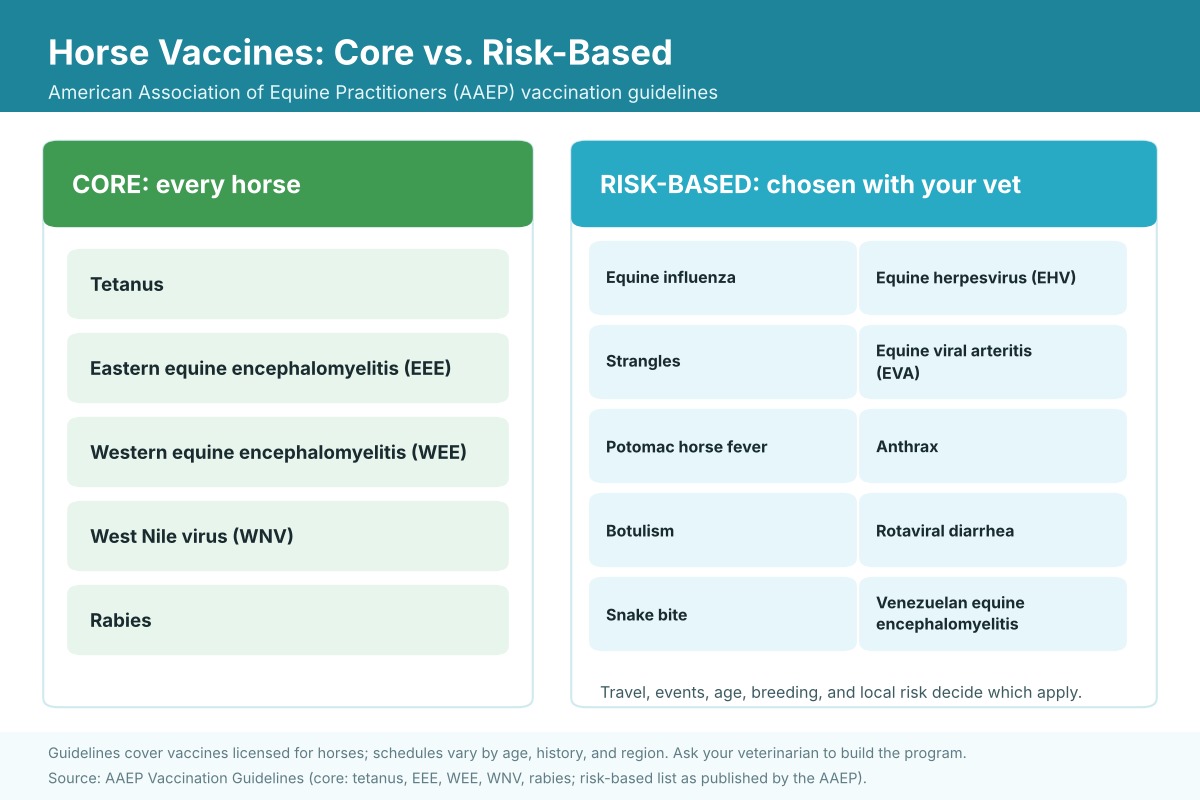
The American Association of Equine Practitioners (AAEP) splits horse vaccines into two groups. Core vaccines suit every horse, and risk-based vaccines are added after a veterinarian weighs your horse’s exposure, travel, and age.
Core Vaccines for Every Horse
The AAEP lists five core diseases: tetanus, Eastern equine encephalomyelitis, Western equine encephalomyelitis, West Nile virus, and rabies. Horses meet these in the environment regardless of how little they travel, and the outcome of infection is serious.
Risk-Based Vaccines by Lifestyle
Horses that travel, show, board, or mingle with new arrivals face more exposure to respiratory and contagious diseases. Equine influenza, equine herpesvirus, and strangles are common risk-based choices, and your veterinarian times boosters around event dates and mosquito season. Keep a written record so any barn or event can verify your horse’s history.
Coggins Test for Horses: What It Is and When You Need One
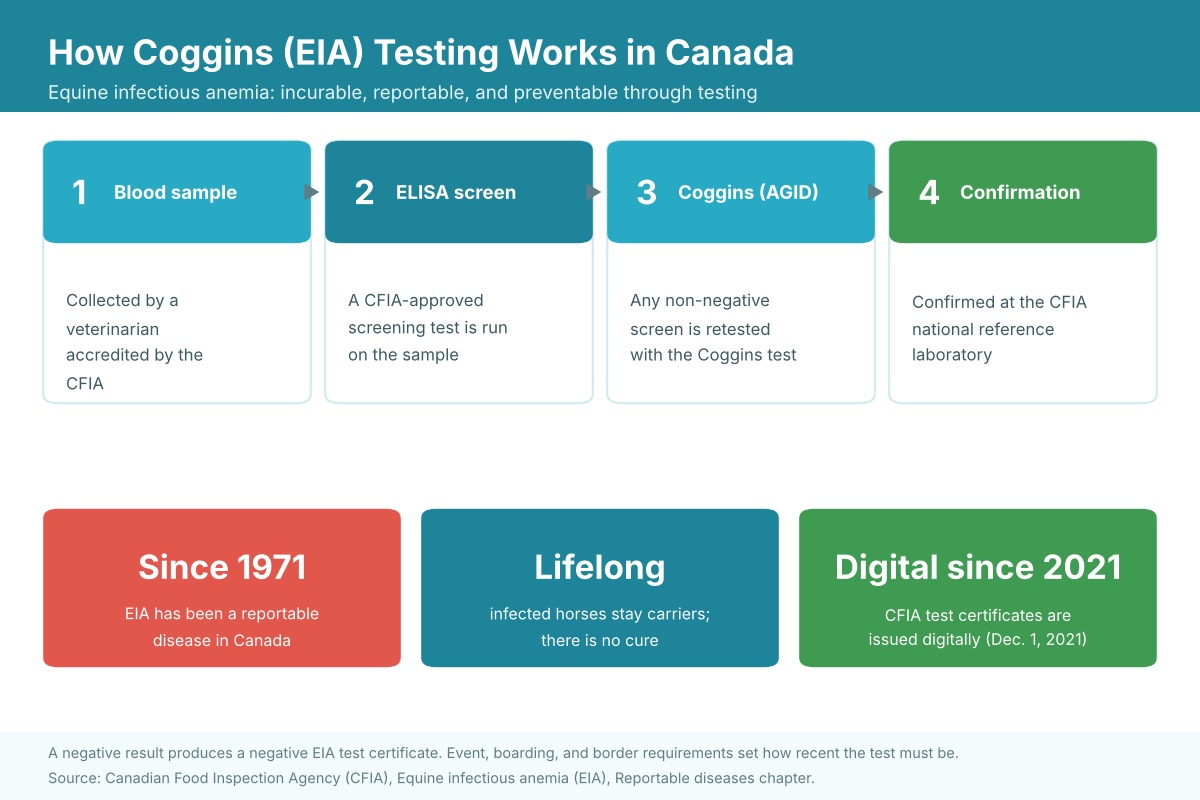
A Coggins test screens a horse’s blood for equine infectious anemia (EIA), a viral disease with no cure. According to Manitoba Agriculture, infected horses remain carriers for life and the disease is reportable in Canada. Manitoba Agriculture also strongly recommends that organizers of shows, racetracks, rodeos, clinics, and trail rides require a current negative EIA test certificate.
How EIA Testing Works in Canada
Samples are collected by a veterinarian accredited by the Canadian Food Inspection Agency (CFIA). A CFIA-approved ELISA screens the sample, and any non-negative result is retested with the agar gel immunodiffusion (AGID) test, which is the original Coggins test. Confirmatory testing happens at the CFIA national reference laboratory, and certificates have been digital since December 1, 2021.
When You Need a Current Negative Coggins
- Entering shows, rodeos, clinics, and many trail rides
- Moving to a boarding barn or joining a new herd
- Buying or selling a horse
- Travelling across the border
Each venue sets how recent the test must be, so confirm the requirement before you book the appointment. A negative result is a snapshot of one moment, not lifetime protection.
Horse Teeth Floating and Equine Dentistry
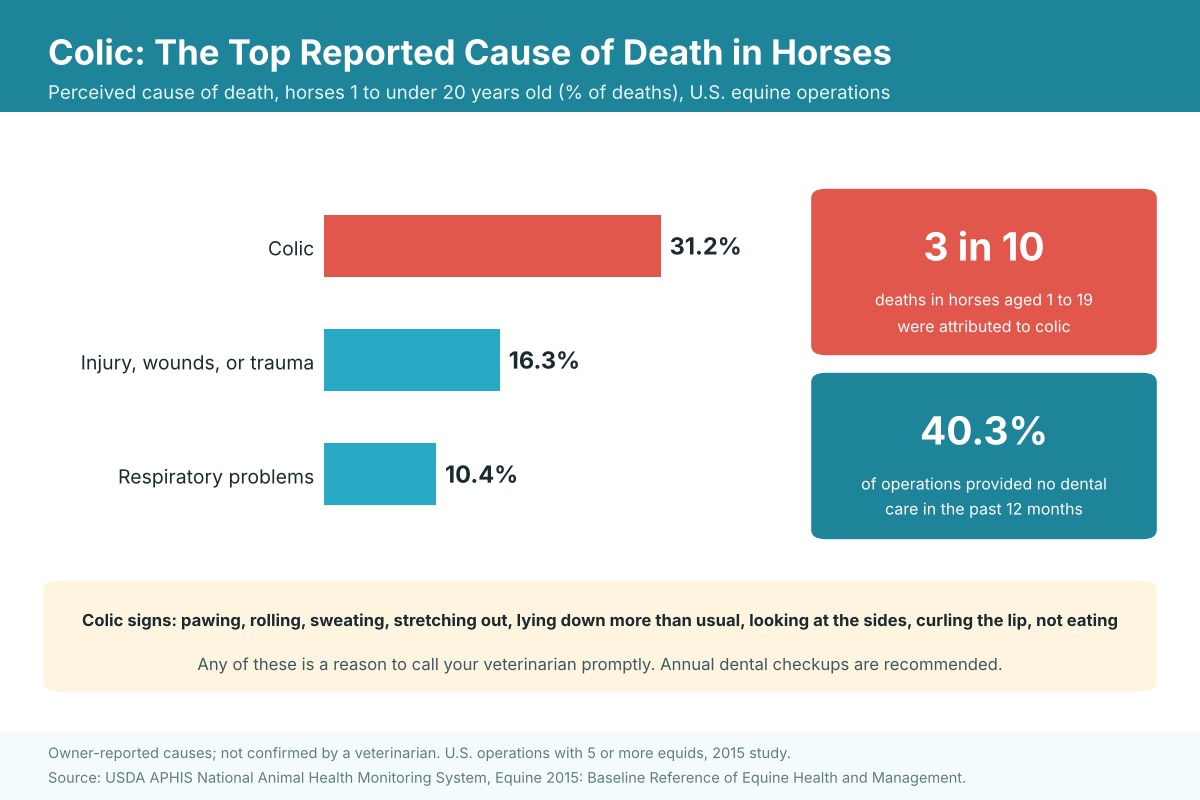
Horse teeth keep changing as the horse ages, and sharp edges or uneven wear affect how a horse chews, carries a bit, and holds weight. USDA’s national equine study notes that annual dental checkups are recommended, and sooner when signs of a dental problem appear. Yet 40.3% of the operations surveyed provided no dental care at all in the previous 12 months.
Signs of Dental Problems in Horses
- Long, unchewed particles of hay in the manure
- Changes in eating or drinking habits
- Partially chewed feed dropped from the mouth
- Slow chewing or a lost appetite
- Weight loss
- Resistance to the bit
Teeth floating and an oral exam are done by a veterinarian who can also assess the rest of the mouth and the horse’s general condition, which matters most for seniors.
Lameness Exams and Equine Diagnostics
Horse owners often notice a change before they can name it. A lameness exam turns a vague concern into a clear answer, and early evaluation protects both soundness and the owner’s budget.
Signs of Lameness and Performance Change
- Intermittent or sudden lameness
- A horse that feels uneven, resists turning, or looks off in transitions
- Reactions to grooming or saddling that are new
- Reluctance to work, or a drop in performance without an obvious cause
- Airway or breathing noise during work
- Swelling, heat, or tenderness in a leg or hoof
What a Lameness Workup Typically Involves
A workup starts with history and observation of the horse moving, then a hands-on exam of the limbs and hooves. Diagnostic imaging such as ultrasound and X-rays is added when appropriate, and endoscopy supports the evaluation in selected cases. The result is a treatment plan with clear follow-up guidance. A short video of the horse moving helps a lot when the problem comes and goes.
Colic and Equine Emergencies: When to Call Right Away
Colic is abdominal pain with many possible causes, and it is the most common reason owners report losing a horse between 1 and 19 years of age. In USDA’s national equine study, colic accounted for 31.2% of reported deaths in that age group, ahead of injuries at 16.3% and respiratory problems at 10.4%.
Signs of Colic
- Pawing at the ground
- Rolling or repeatedly lying down
- Sweating
- Stretching out
- Looking at the sides
- Curling the lip
- Not eating
Other Reasons to Call Promptly
- Sudden lameness or a horse that will not bear weight
- Labored breathing
- A deep or bleeding wound, or one near a joint
- Severe lethargy
- A fast change in appetite, behaviour, or drinking
Call the clinic as soon as you see these signs so the team can advise you, and do not give medication unless your veterinarian tells you to.
Pre-Purchase Exams and Second Opinions
A pre-purchase exam gives you an independent veterinary view of a horse’s health and soundness before money changes hands. Fewer than one in ten operations in the USDA study used a veterinarian for a purchase or insurance exam in a year (8.6%), which means many buyers learn about problems only after the sale. Bring the horse’s age, intended use, and any records you have, and ask the veterinarian to focus on what matters for that job.
Mobile Equine Vet vs. Clinic Visits
Some horses are best examined where they live, especially when hauling is stressful or unnecessary. Others suit a clinic, where handling, observation, and repeat checks are more controlled. The right choice depends on the horse, the problem, and the evaluation needed.
How an Equine Vet in Manitoba Delivers Mobile and Clinic Care
| Type of Concern | Mobile Service May Be Best When | Clinic Care May Be Best When |
|---|---|---|
| Routine wellness and vaccination | The horse can be handled safely on site and the visit is straightforward | You prefer a clinic appointment or other care is being coordinated at the same time |
| Lameness or performance change | It helps to see the horse on its normal footing or in its work environment | More structured observation or follow-up is the better fit |
| Diagnostic workup | The case can be reasonably assessed on the farm with the available equipment and conditions | The horse needs controlled handling, monitoring, or repeat assessment |
| General illness or behaviour change | Transport would add stress or delay the first assessment | Clinic oversight is the clearer next step after the first evaluation |
Not sure which fits? Send your horse’s details, including age, location, main concern, and whether hauling is realistic.
How to Prepare for an Equine Appointment
A little preparation makes any appointment safer, faster, and calmer for the horse.
Have these ready:
- Halter and lead rope
- A safe area with decent footing and good light
- Vaccination, deworming, and dental history if available
- Farrier schedule and recent shoeing details when relevant
- A short description of the concern and when it began
- Video of the horse moving if the issue is intermittent
Mention these when you book:
- The horse’s age and use
- Whether the concern is sudden or ongoing
- Whether the horse is safe to handle normally
- Whether hauling to a clinic is realistic
- Any change in performance, breathing, eating, or movement
Equine Vet Near Me: Clinics Serving Manitoba Horse Owners
If you are searching for an equine vet near me, start with the clinic closest to your barn. About 1,200 Manitoba farms reported horses or ponies in the 2021 Census of Agriculture, according to Manitoba Agriculture, and that count leaves out boarding and riding-only operations. Rural distances are real, which is why mobile service matters.
St. Claude
Horse owners in and around St. Claude can arrange wellness care and farm visits through this clinic. See the St. Claude clinic details.
Carman
Owners in the Carman area can coordinate horse care, records, and follow-up here. See the Carman clinic details.
Notre Dame de Lourdes
Horse owners near Notre Dame de Lourdes can reach the team for equine care. See the Notre Dame clinic details.
Many horse owners also keep cattle, goats, dogs, or cats, and the same team can help with the rest of the property:
- Cattle and herd health care for beef and dairy operations
- Goat herd health care for vaccines and management
- Care for many species across a mixed property
- Dog wellness and surgery for the barn dog
- Cat checkups and senior care for the barn cats
Equine Vet FAQs
How often should my horse have a wellness exam?
Most horses benefit from a yearly wellness review, while senior horses or animals with ongoing concerns may do better with more frequent check-ins.
What vaccines does my horse need?
The AAEP lists tetanus, Eastern and Western equine encephalomyelitis, West Nile virus, and rabies as core vaccines for every horse. Risk-based vaccines, such as influenza, equine herpesvirus, and strangles, depend on travel, age, and exposure.
How often does a horse need its teeth floated?
USDA’s national equine study notes that annual dental checkups are recommended, and sooner when signs appear, such as dropped feed, slow chewing, weight loss, or resistance to the bit.
What is a Coggins test and when do I need one?
A Coggins test screens a horse’s blood for equine infectious anemia. Many events, boarding barns, and border crossings require a current negative result, and each venue sets how recent the test must be.
Do you offer mobile equine veterinary service?
Yes. Mobile service is available when on-farm care is the right fit and the horse can be handled safely in a suitable area.
What are the signs of colic in a horse?
Common signs include pawing, rolling, sweating, stretching out, lying down more than usual, looking at the sides, curling the lip, and not eating. Call your veterinarian promptly if you see them.
When should I call sooner instead of waiting?
Call promptly for colic signs, sudden lameness, labored breathing, major wounds, severe lethargy, or any fast change in appetite, behaviour, or drinking.
What records should I have ready for my horse?
If possible, have vaccination history, dental history, deworming information, farrier details, and any recent treatment notes available for the visit.
How much does an equine vet visit cost?
Fees depend on the service, the distance travelled, and the number of horses seen, so mobile visits are quoted individually. Share your location, your horse’s age, and the reason for the visit to get an estimate.
Can you help if I own other animals too?
Yes. If your property includes cattle, goats, dogs, cats, or other animals, the clinic can direct you to the right service.
Book Equine Veterinary Care in Manitoba
If your horse needs wellness care, dentistry, a Coggins test, a lameness evaluation, or a mobile visit, contact the Rolling Plains Veterinary Corporation team today and we will help you choose the right next step.