Finding a reliable livestock vet in Manitoba means finding a team that protects herd health, answers calving and breeding questions quickly, and makes clear decisions when timing matters. Rolling Plains Veterinary Corporation supports beef and dairy producers with herd health planning, pregnancy diagnosis, calving support, diagnostics, treatment guidance, and mobile farm visits.
What Does a Livestock Vet in Manitoba Do?
A livestock vet in Manitoba diagnoses and treats cattle, builds herd health programs, performs pregnancy checks, assists difficult calvings, and writes the prescriptions producers need, either on the farm or at the clinic. A farm animal veterinarian also looks for patterns across the whole herd, not just the single animal in the chute.
- Prevention: herd health plans, vaccination strategy, and parasite protocols matched to season and risk
- Reproduction: pregnancy diagnosis, breeding-season follow-up, and calving support
- Sick-animal care: assessment, diagnostics, treatment plans, and follow-up
- Prescriptions: veterinary oversight for the antibiotics that now require one
- Flexibility: on-farm visits when care is best delivered at home, clinic support when it is not

Livestock Veterinary Services for Beef and Dairy Herds
Some visits are scheduled and preventive. Others are urgent. The table shows how producers typically use a large animal vet through the year, and the full range of veterinary services covers the rest of the farm and household.
| Service | Typical Reason to Book | What It Involves |
|---|---|---|
| Herd health planning | Setting a prevention schedule before problems cost production | Review of records, vaccination and parasite protocols, and seasonal risks |
| Pregnancy diagnosis | After the breeding season or at weaning | Identifying pregnant and open females so rebreeding and culling decisions are made early |
| Calving support | Labour is not progressing or a calf is in distress | Assessment, help with delivery, and clear advice on next steps |
| Sick-animal assessment | Off-feed, depressed, or stressed cattle | Examination, diagnostics, and a treatment plan |
| Lameness evaluation | Mobility problems in one animal or several | Examination, diagnosis, and treatment guidance |
| Herd-level problem solving | Sudden production drops or several animals showing similar signs | Case review, diagnostics, and management recommendations |
| Prescriptions and follow-up | Antibiotics or other treatments are needed | Veterinary prescription, dosing, and withdrawal-time guidance |
Pregnancy Checks for Cattle: Methods and Timing
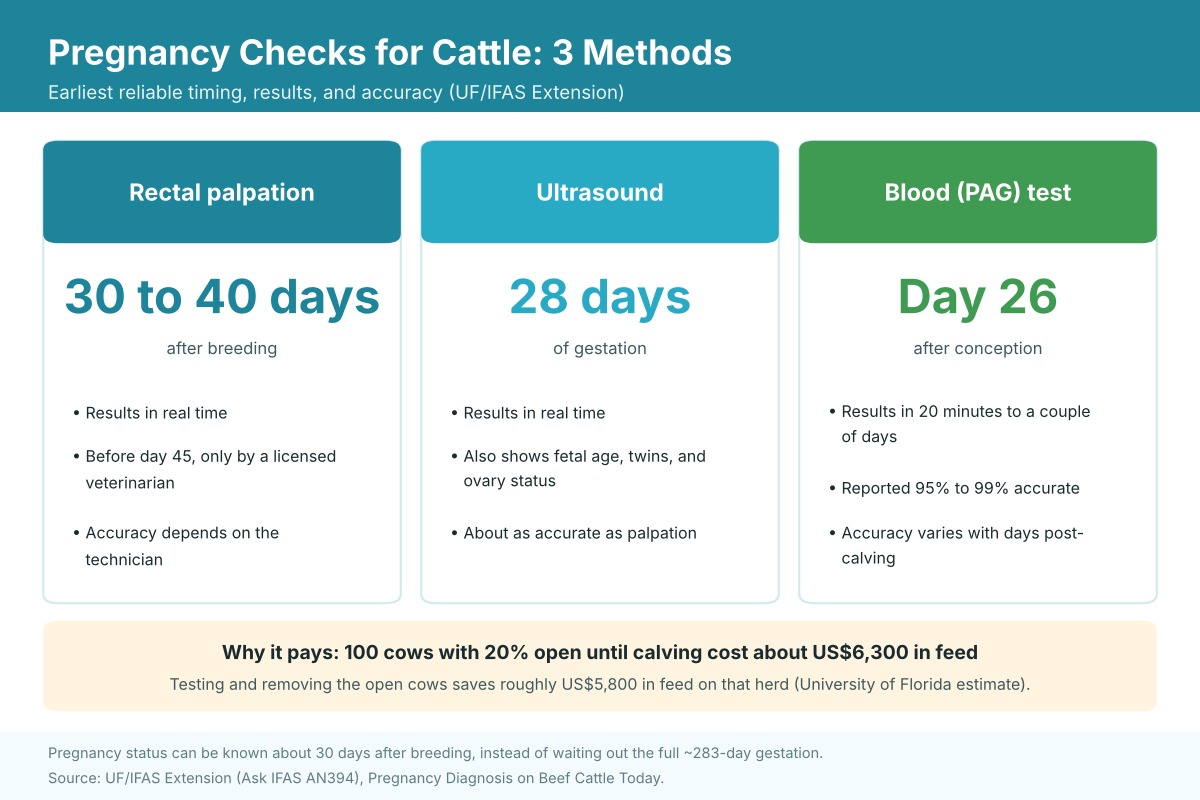
Pregnancy diagnosis tells you which females are pregnant, which are open, and how far along each one is while you can still act on it. University of Florida extension researchers note that producers can know pregnancy status about 30 days after breeding instead of waiting through the roughly 283-day gestation.
Palpation, Ultrasound, and Blood Tests Compared
| Method | Earliest Timing | Results | Notes |
|---|---|---|---|
| Rectal palpation | 30 to 40 days after breeding | Real time | Before day 45, only a licensed veterinarian should palpate, because of the risk of causing abortion |
| Rectal ultrasound | From 28 days of gestation | Real time | Also shows fetal age, twins, and ovary status |
| Blood (PAG) test | From day 26 after conception | 20 minutes to a couple of days | Reported 95% to 99% accurate; results depend on days post-calving and other factors |
Your veterinarian recommends the method that fits your breeding dates, handling facilities, and herd goals.
Why Early Pregnancy Checks Pay Off
Open cows eat feed all winter and produce no calf. In the University of Florida example, 100 cows with 20% open until calving cost about US$6,300 in feed, and testing then removing the open cows saves roughly US$5,800 of it. Early results also give you choices while they still matter: rebreed, sell, or cull. For herds using artificial insemination, an early result can allow a second round in the next cycle.
Calving Help: When to Call a Large Animal Vet
Most cows calve without help, but a difficult calving can turn quickly. Cornell University’s College of Veterinary Medicine reports that calving difficulty affects 13 to 15% of Holstein calves, and that early intervention gives the best chance of calf survival and future fertility for the cow. The habit that saves the most calves is acting when progress stops, not after everything has gone wrong.
Calving Stages and Call Triggers
| Stage | Normal Timing | Call a Veterinarian If |
|---|---|---|
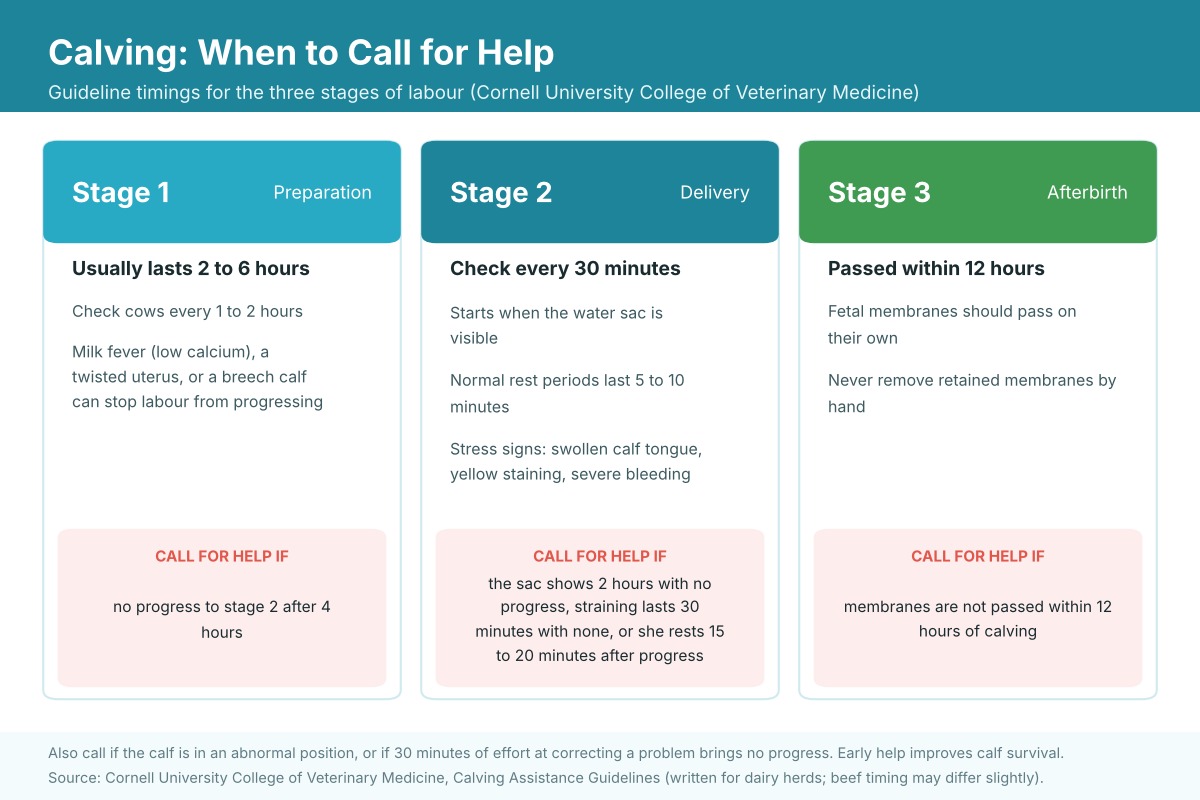
| Stage 1: preparation | Usually 2 to 6 hours | There is no progress to stage 2 after 4 hours |
| Stage 2: delivery | Check every 30 minutes | The water sac has been visible for 2 hours without progress, she has strained for 30 minutes without progress, she stops for more than 15 to 20 minutes after making progress, or the calf shows stress |
| Stage 3: afterbirth | Within 12 hours | The membranes are not passed within 12 hours (never remove them by hand) |
Cornell’s guidelines were written for dairy herds, so timing in beef cows and first-calf heifers can differ. When in doubt, call early.
Signs of a Difficult Calving
- Active straining for 30 minutes with no progress
- A calf in an abnormal position, such as a backward presentation, a missing leg, or a head turned back
- A swollen calf tongue or yellow staining on the calf
- Severe bleeding from the cow
- A cow that stops pushing and does not restart after making progress
- Thirty minutes of your own effort at correcting a problem without gain
Cornell also notes that calves delivered by C-section after a failed forced pull survive less often than calves delivered by C-section alone, so the call should come early.
Calving season or breeding work coming up? Tell us your herd size, timing, and what you need, and we will help you plan the visit.
Herd Health Planning and Veterinary Prescriptions
Prevention costs less than treating a herd-wide problem. A herd health plan sets vaccination, parasite control, nutrition checkpoints, and treatment protocols before pressure hits, and it records who does what when something changes.
Why a Veterinary Relationship Matters for Antibiotics
Since December 1, 2018, Canadian producers need a prescription from a licensed veterinarian to buy medically important antibiotics for livestock. According to the Beef Cattle Research Council, a valid veterinarian-client-patient relationship is what makes that prescription possible. It exists when your veterinarian knows your operation well enough to make clinical judgments about your animals and you agree to follow their instructions. Ionophores are not covered by the rule.
Working with one clinic that knows your herd, records, and treatment history makes prescriptions faster and treatment decisions better.
Seasonal Herd Health Checkpoints
| Season | Topics to Review With Your Veterinarian |
|---|---|
| Calving season | Calving supplies and handling, colostrum and newborn calf care, cow body condition, and when to call for help |
| Turnout and breeding | Vaccination timing, parasite control, lameness, and breeding-season follow-up |
| Weaning and fall work | Pregnancy diagnosis, culling decisions, and weaning-time health protocols |
| Winter feeding | Nutrition, body condition, record review, and treatment protocol updates |
Beef and Dairy Herd Support in Manitoba
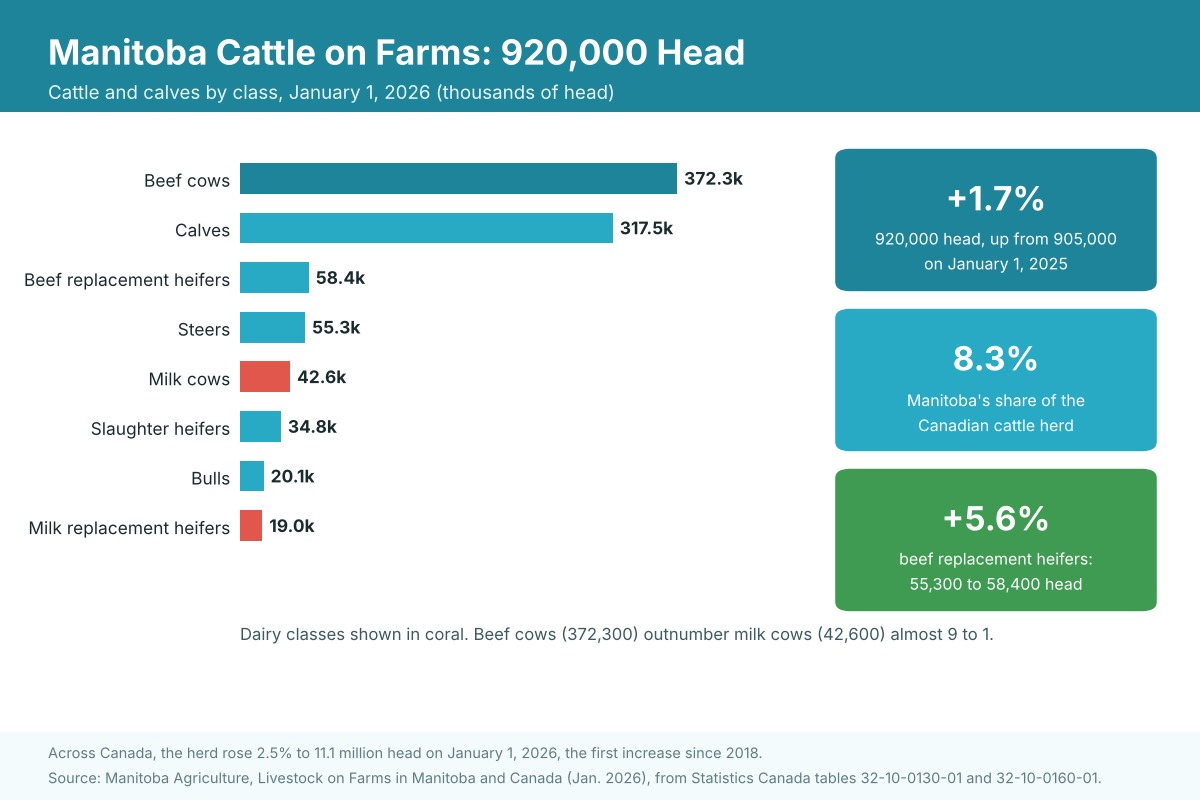
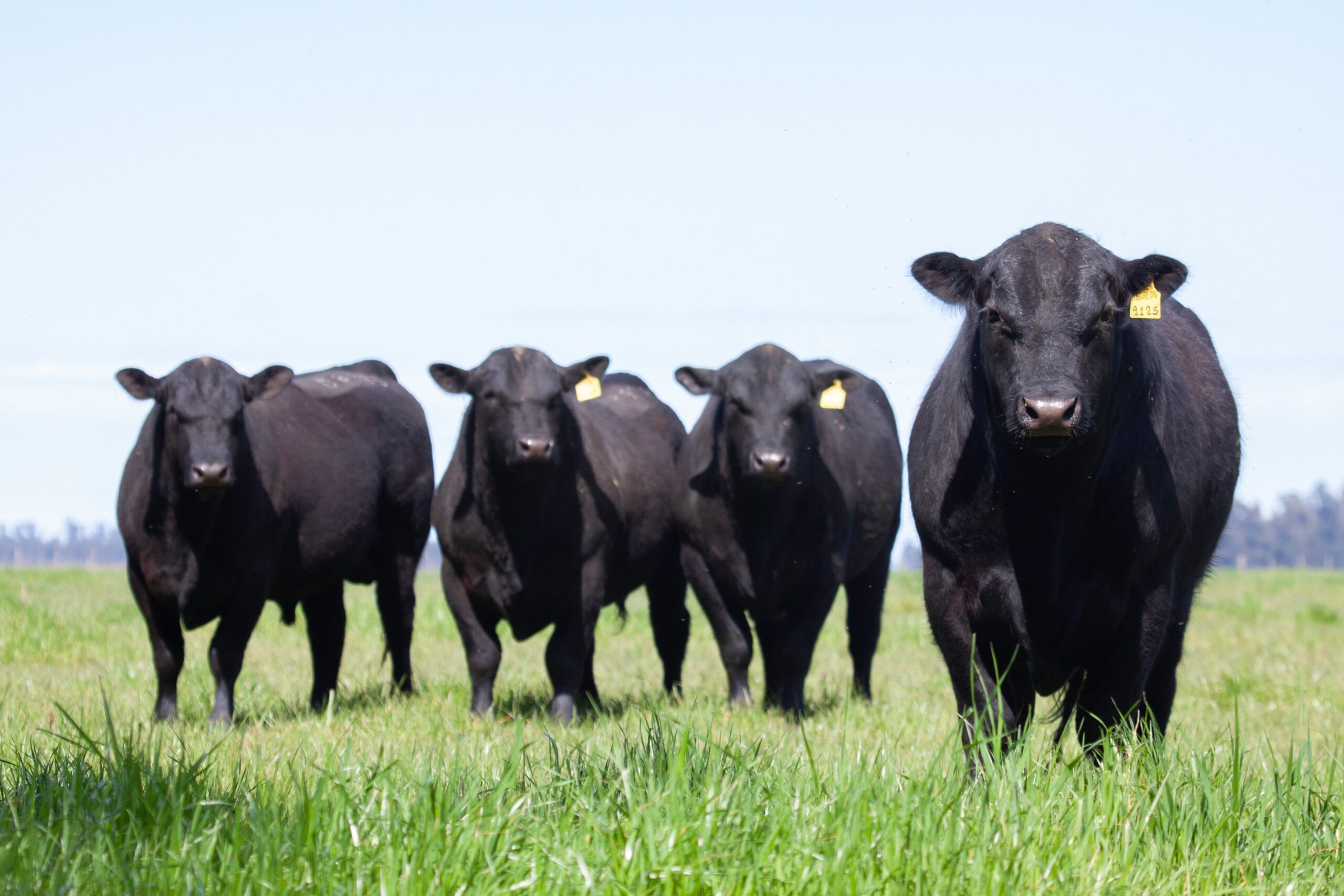
Manitoba producers held 920,000 cattle and calves on January 1, 2026, up from 905,000 a year earlier, according to Manitoba Agriculture. That herd includes 372,300 beef cows and 42,600 milk cows, so the province needs veterinary support built for both beef and dairy.
Beef Herd Priorities
Beef operations work to narrow timing windows. When breeding, calving, vaccination, and weaning are not managed tightly, the cost shows up in performance, treatment load, and losses. Beef replacement heifers rose about 6% to 58,400 head, which points to more first-calf heifers in coming calving seasons.
- Pregnancy diagnosis and breeding-season follow-up
- Calving support and early intervention when labour is not progressing
- Assessment of weak calves, stressed animals, and poor-doing groups
- Vaccination and parasite protocols matched to seasonal patterns
- Practical advice for handling, sorting, and treatment consistency
Dairy Herd Priorities
Dairy herds do best with routine structure. Reproductive efficiency, udder health, milk quality, and transition management all matter because small misses compound into larger production and treatment problems.
- Scheduled reproductive monitoring and pregnancy checks
- Consistent herd protocols and treatment follow-up
- Problem-solving when milk quality or herd performance shifts
- Review of health patterns during stressful or high-risk periods
- Planning that fits your staffing, facilities, and goals
Livestock Vet Near Me: Clinics Serving Manitoba Producers
If you are searching for a livestock vet near me, start with the clinic closest to your operation. Producers can coordinate herd records, medications, and follow-up care through one veterinary group instead of piecing services together.
St. Claude
Producers in and around St. Claude can arrange herd care and farm visits through this clinic. See the St. Claude clinic details.
Carman
Producers in the Carman area can coordinate livestock care, records, and follow-up here. See the Carman clinic details.
Notre Dame de Lourdes
Livestock owners near Notre Dame de Lourdes can reach the team for herd support. See the Notre Dame clinic details.
Many Manitoba properties keep more than cattle, and the same team can help with the rest:
- Goat herd health care for vaccines and management
- Horse care for lameness exams and emergency response
- Care for many species across the whole property
- Dog wellness and surgery for the farm dogs
- Cat checkups and senior care for the barn and house cats
On-Farm Visits vs. Clinic Care
Not every case should be handled the same way. Some are easier and less stressful on the farm, especially when several animals are involved. Others suit the clinic, where handling is more controlled.
How a Livestock Vet in Manitoba Delivers Care On Farm or In Clinic
| Type of Need | On-Farm Service May Be Best When | Clinic Support May Be Best When |
|---|---|---|
| Preg checks and herd work | You are working through multiple animals and have safe handling facilities ready | The concern is limited to one animal and transport is practical |
| Sick-animal evaluation | The animal should be assessed in its normal environment or several animals may be involved | The animal needs closer controlled handling or follow-up in a structured setting |
| Calving concerns | Immediate farm assessment is the fastest route and facilities allow safe intervention | The case can be transported safely and clinic oversight is the better option |
| Diagnostics and follow-up | You need herd context, management review, or facility-related observations | The case needs more direct in-clinic coordination or repeat checks |
Not sure which fits? Send your herd details, including the animal count, concern, timeline, and whether the operation is beef or dairy.
How to Prepare for a Farm Visit
Good preparation shortens the visit and improves the outcome for the cattle. It also helps the team bring the right equipment.
Have these ready before we arrive:
- Safe working facilities, such as a chute, alley, head gate, or pen setup
- Animal IDs and treatment history, when available
- A short summary of the concern and when it started
- Any recent feed, housing, water, weather, or group changes
- A clear goal for the visit, such as preg checks, calving help, diagnostics, or herd review
Questions we may ask when you book:
- Is this beef or dairy cattle?
- How many animals are involved?
- Is the concern acute, ongoing, or herd-wide?
- What treatments have already been tried?
- Are there handling limitations we should know about?
Livestock Vet FAQs
Do you work with both beef and dairy cattle?
Yes. We support both beef and dairy producers, and our recommendations depend on herd goals, facilities, timing, and the challenge you are facing.
Is a large animal vet the same as a livestock vet?
In practice, yes. Large animal vet, farm vet, farm animal veterinarian, and livestock veterinarian all describe a veterinarian who treats cattle and other farm species. Our team also treats goats and horses, along with dogs and cats.
Do you offer pregnancy diagnosis for cattle?
Yes. Pregnancy diagnosis is one of the most common reasons producers book. Your veterinarian recommends the method and timing based on your breeding dates and handling facilities, and accepted methods become reliable roughly 26 to 40 days after breeding.
When should I call a vet during calving?
Call if there is no progress to stage 2 after 4 hours, the water sac has been visible for 2 hours without progress, she has strained for 30 minutes without progress, or the calf is in an abnormal position. When in doubt, call early.
Do I need a veterinarian to get antibiotics for my cattle?
Yes. Since December 1, 2018, medically important antibiotics for livestock require a prescription from a licensed veterinarian who has a valid veterinarian-client-patient relationship with you and your herd.
Can you come out to the farm?
Yes, when on-farm service is appropriate and safe handling facilities are available. Tell us the animal count, the concern, and whether the visit is for routine herd work or a more urgent problem.
What should I have ready before a livestock appointment?
Have animal IDs, recent treatment history, a workable handling area, and a short summary of what changed and when it started. That speeds up good decisions during the visit.
How much does a farm call cost?
Farm call fees depend on distance, time of day, and the number of animals seen, so each call is quoted individually. Share your location, herd size, and reason for the visit to get an estimate.
Can I contact you if my farm includes other species too?
Yes. If your property includes goats, horses, dogs, cats, or other animals, the clinic can direct you to the right service.
Book Livestock Veterinary Care in Manitoba
If you need herd support, pregnancy checks, calving help, diagnostics, or a farm visit for a cattle concern, contact the Rolling Plains Veterinary Corporation team today. We will help you choose the right clinic connection and the right next step for your operation.