
What Services Does a Large Animal Vet Provide in Manitoba?
September 14, 2026 6:32 pmLarge animal vet in Manitoba is a phrase that covers a lot of ground. Cattle, horses, and other large animals face health challenges that look nothing like the illnesses and injuries seen in a household dog or cat, and treating them calls for specialized training, specific equipment, and plenty of hands-on farm experience. Diagnosing a limping horse, treating a sick calf, or planning a herd-wide vaccination schedule all require a veterinary team that understands large animal medicine from the ground up.
Rolling Plains Veterinary Corporation works with cattle producers, horse owners, and hobby farmers throughout the region to support large animal health at every stage of life. From routine wellness exams to urgent care for an animal that suddenly cannot stand, our veterinarians combine preventive planning with fast, practical treatment whenever something goes wrong.
Large Animal Vet in Manitoba: Core Services and Responsibilities
Large animal veterinary medicine covers far more than the occasional checkup. Many appointments happen directly on a farm or acreage rather than inside a clinic, which means a veterinarian has to understand not just the animal in front of them but also the herd, the environment, the nutrition program, and the day-to-day realities of livestock or horse ownership.
Some of the most common services a large animal veterinary team provides include:
- Preventive wellness exams and physical evaluations
- Core and risk-based vaccinations
- Parasite prevention and control programs
- Reproductive exams, breeding soundness evaluations, and pregnancy checks
- Disease diagnosis and laboratory testing
- Treatment of injuries, illnesses, and infections
- Emergency and after-hours veterinary care
- Herd health consultation and biosecurity planning
- Medication guidance and treatment protocols
The right combination of services depends on the animal’s species, age, purpose, and health history, along with the realities of the farm or property where it lives. A backyard hobby horse and a working cattle herd will not need the exact same care plan, even though both fall under large animal medicine.
Cattle Health Care Across Manitoba’s Farms and Ranches
Cattle production is a major part of agriculture in this province, and herd health has a direct effect on the success of any operation, whether it involves a handful of animals or several hundred. Professional veterinary support helps producers protect individual cattle while also managing risk across an entire herd.
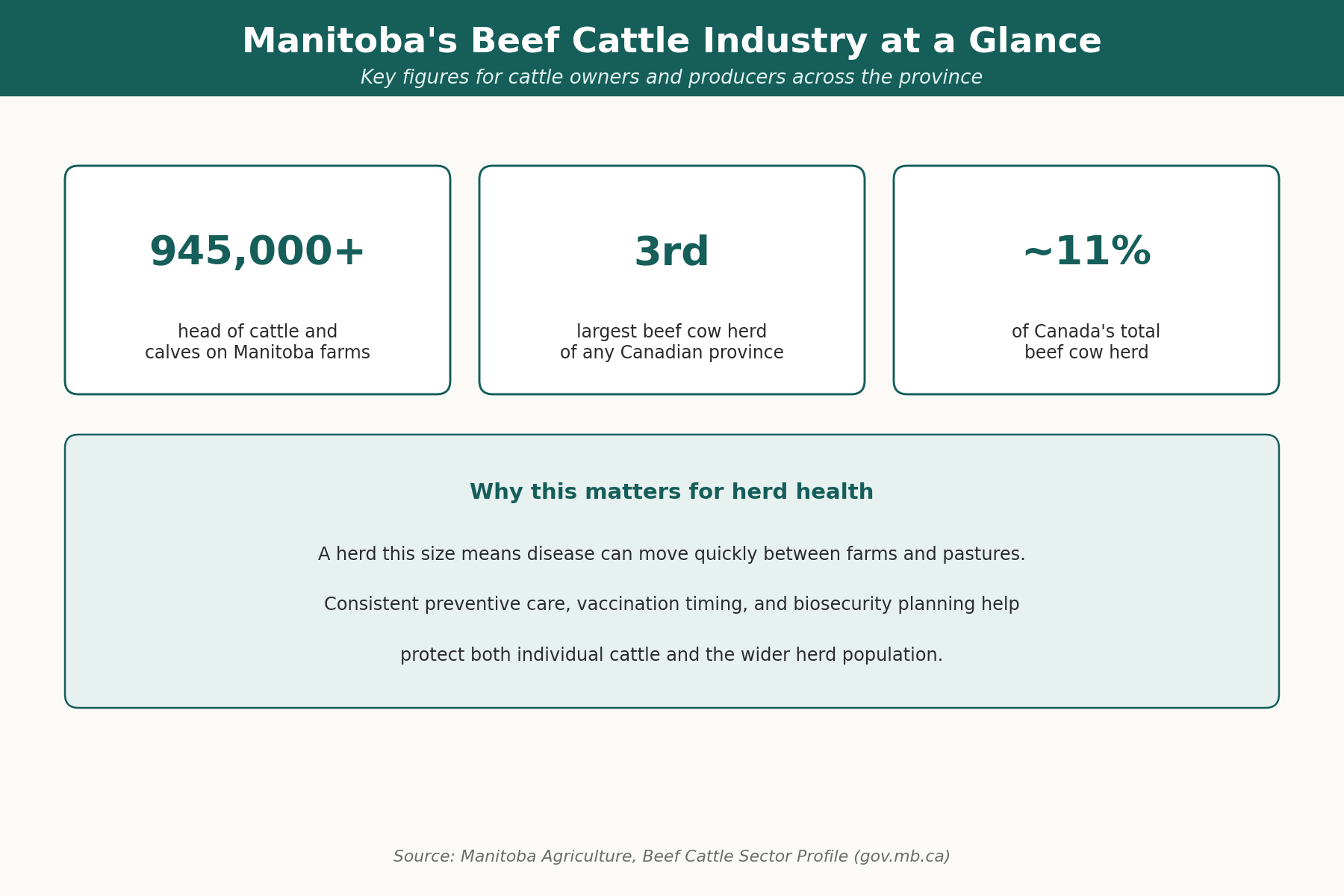
A herd of this size across the province means that disease can move quickly between neighbouring farms and shared pastures, which is one of the reasons herd-level planning matters just as much as individual animal care. For a closer look at the data behind that chart, Manitoba Agriculture’s beef cattle sector profile tracks herd size and trends across the province each year.
Routine Herd Monitoring and Physical Exams
Routine exams give a veterinarian the chance to catch small problems before they become expensive ones. During a herd visit or individual exam, a veterinarian may evaluate:
- General body condition and weight
- Appetite and rumination
- Mobility and joint health
- Respiratory sounds and effort
- Digestive health and manure consistency
- Skin and coat condition
- Reproductive health and cycling
- Signs of infectious disease within the group
- Wounds, swelling, or lameness
These observations tell a veterinarian about more than just one animal. Patterns across a group can flag a nutritional gap, a parasite load, or an early disease outbreak long before it becomes obvious to the naked eye.
Vaccination and Disease Prevention for Cattle
Cattle are exposed to disease through contact with other animals, shared water sources, transportation, breeding, and new arrivals entering the herd. A well-timed vaccination program, built around your specific operation, is one of the most cost-effective tools available for protecting a herd’s long-term health. Respiratory illness in particular is worth taking seriously, since research compiled by the Beef Cattle Research Council identifies it as one of the most common and costly health problems facing the North American beef industry, both in feedlots and in cow-calf herds on pasture.
Producers working with a veterinarian who offers livestock veterinary services can build a prevention plan around the specific risks their herd faces, rather than relying on a generic schedule that may not fit local conditions.
Certain animal diseases also carry legal reporting requirements in Canada, since they can affect not just individual herds but the wider agricultural economy. A few examples relevant to cattle and horse owners are outlined below.
| Disease | Primary Species Affected | Why It Matters |
|---|---|---|
| Bovine Tuberculosis | Cattle, bison | Chronic bacterial disease monitored through federal surveillance programs |
| Bovine Brucellosis | Cattle, bison, elk | Canada is officially free of the disease, but surveillance continues at slaughter facilities |
| Bovine Spongiform Encephalopathy (BSE) | Cattle | Federally reportable disease with strict trade and health implications |
| Equine Infectious Anemia (EIA) | Horses, donkeys, mules | Viral disease requiring mandatory testing for many equine events and interprovincial movement |
A complete and current list is maintained by the Canadian Food Inspection Agency’s reportable disease program, and any suspected case should be reported to a veterinarian right away.
Equine Care: From Wellness Exams to Emergency Colic Response
Horses can be athletes, working partners, or beloved companions, sometimes all three at once, and they can also be remarkably talented at finding creative ways to get themselves into trouble. The size of the equine sector nationally reflects just how significant that relationship is for rural communities.
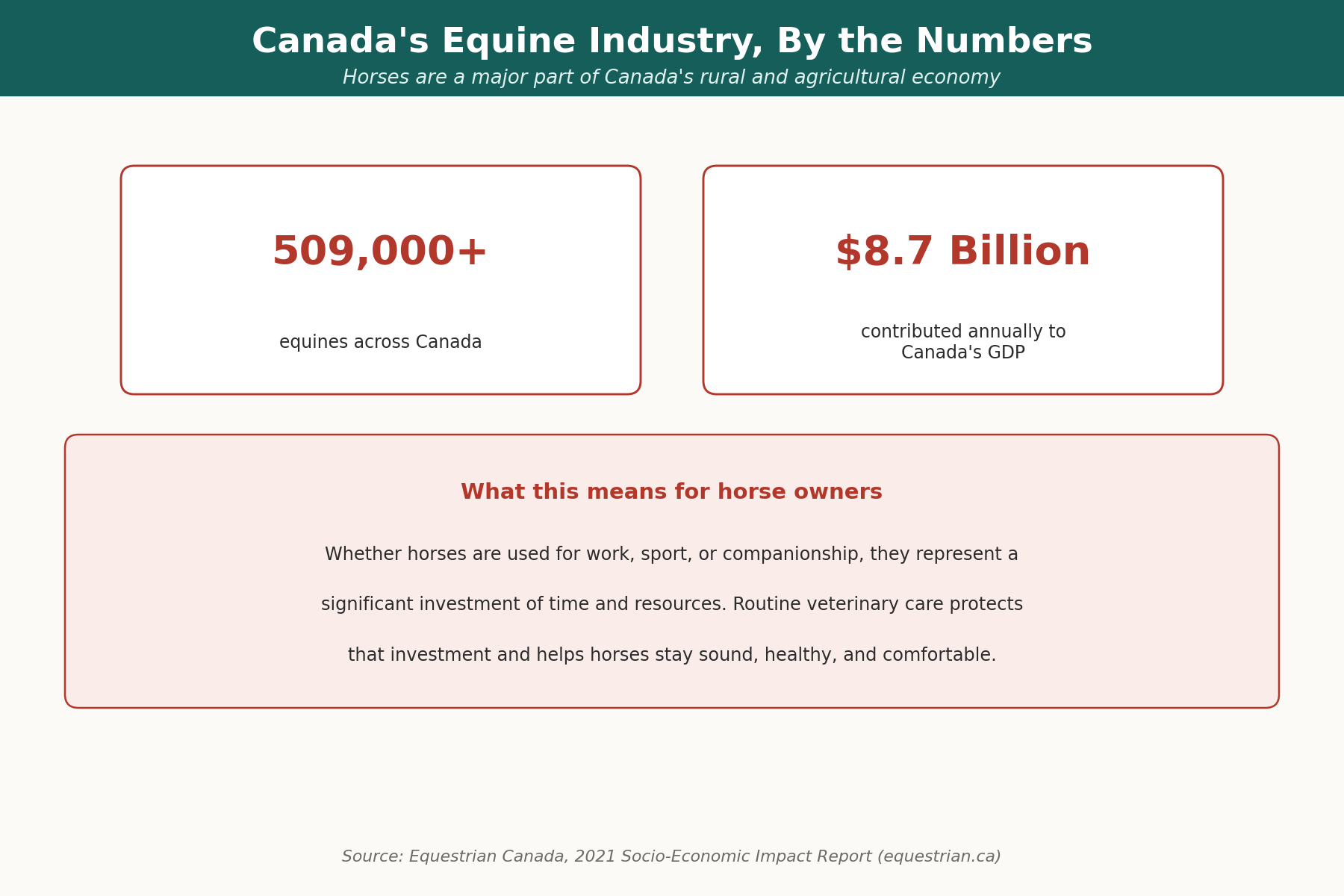
Those figures come from Equestrian Canada’s national economic impact research, and they help explain why so many owners treat routine horse care as a genuine investment rather than an afterthought.
Horse Wellness Examinations
Routine exams give a veterinarian the opportunity to assess a horse’s overall condition and catch concerns early. Since horses cannot describe exactly where something hurts, owners should watch for and report:
- Significant appetite changes
- Abnormal or withdrawn behaviour
- Persistent coughing or nasal discharge
- Difficulty breathing
- Lameness or reluctance to move
- Swelling anywhere on the body
- Wounds that are not healing normally
- Sudden weight loss or reduced energy
- Any visible sign of pain or distress
Owners usually know their horses better than anyone else, so a noticeable change from normal behaviour is worth a phone call, even if the symptoms seem mild at first.
Core Vaccines for Every Horse
Vaccination protocols for horses are typically split into core vaccines, recommended for every horse regardless of lifestyle, and risk-based vaccines, chosen based on travel, boarding, and exposure. The chart below outlines the four vaccines considered core for horses in North America.
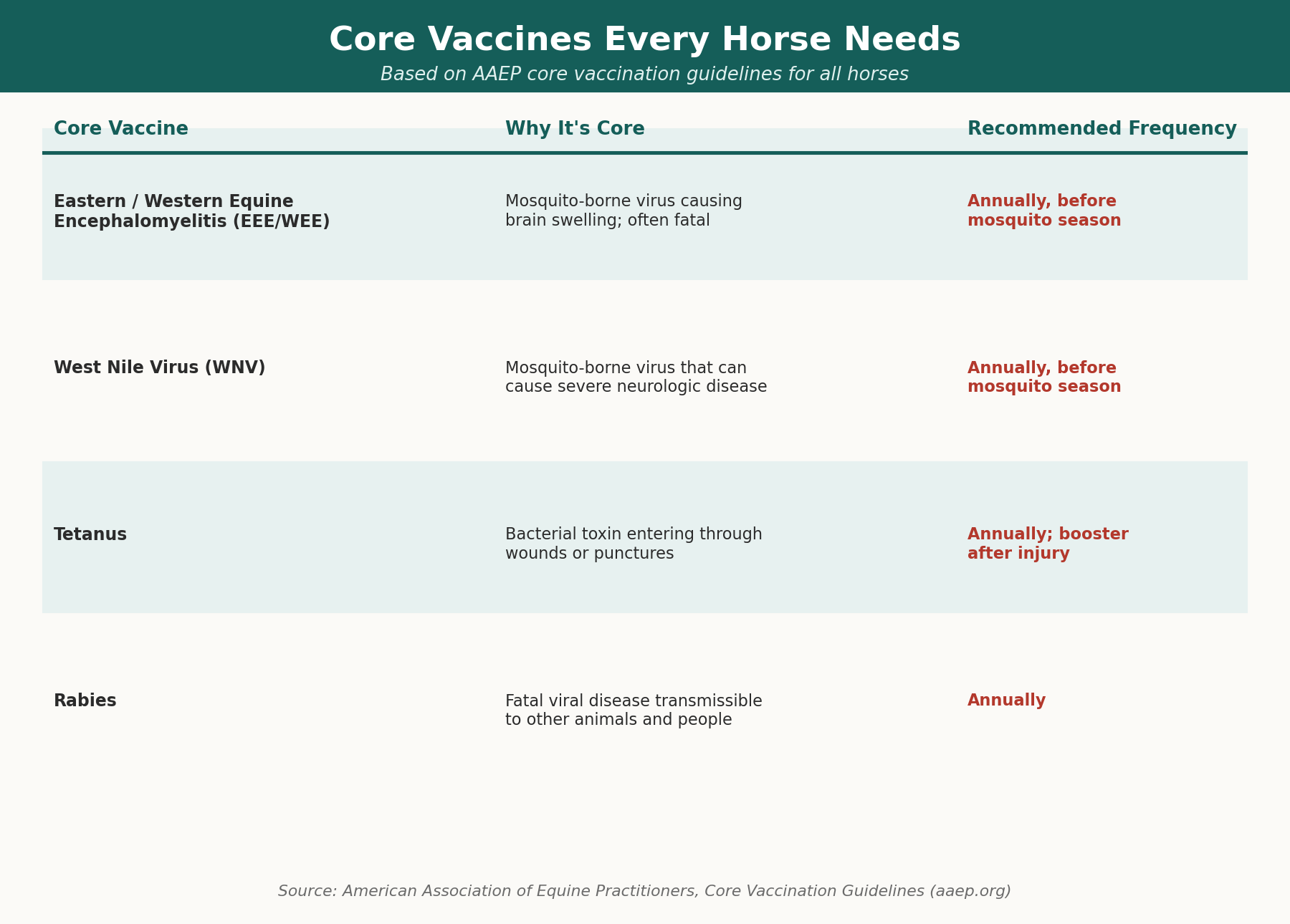
These recommendations come from the American Association of Equine Practitioners’ core vaccination guidelines, which are updated regularly as new disease data becomes available. A veterinarian offering equine veterinary care can help determine which risk-based vaccines make sense for a given horse’s lifestyle and travel schedule on top of these core protections.
Recognizing and Responding to Colic
Colic is one of the most common emergencies in horse ownership, and it is not a single disease but a general term for abdominal pain that can stem from many different causes. National survey data gives a helpful picture of how often it happens and how it typically resolves.
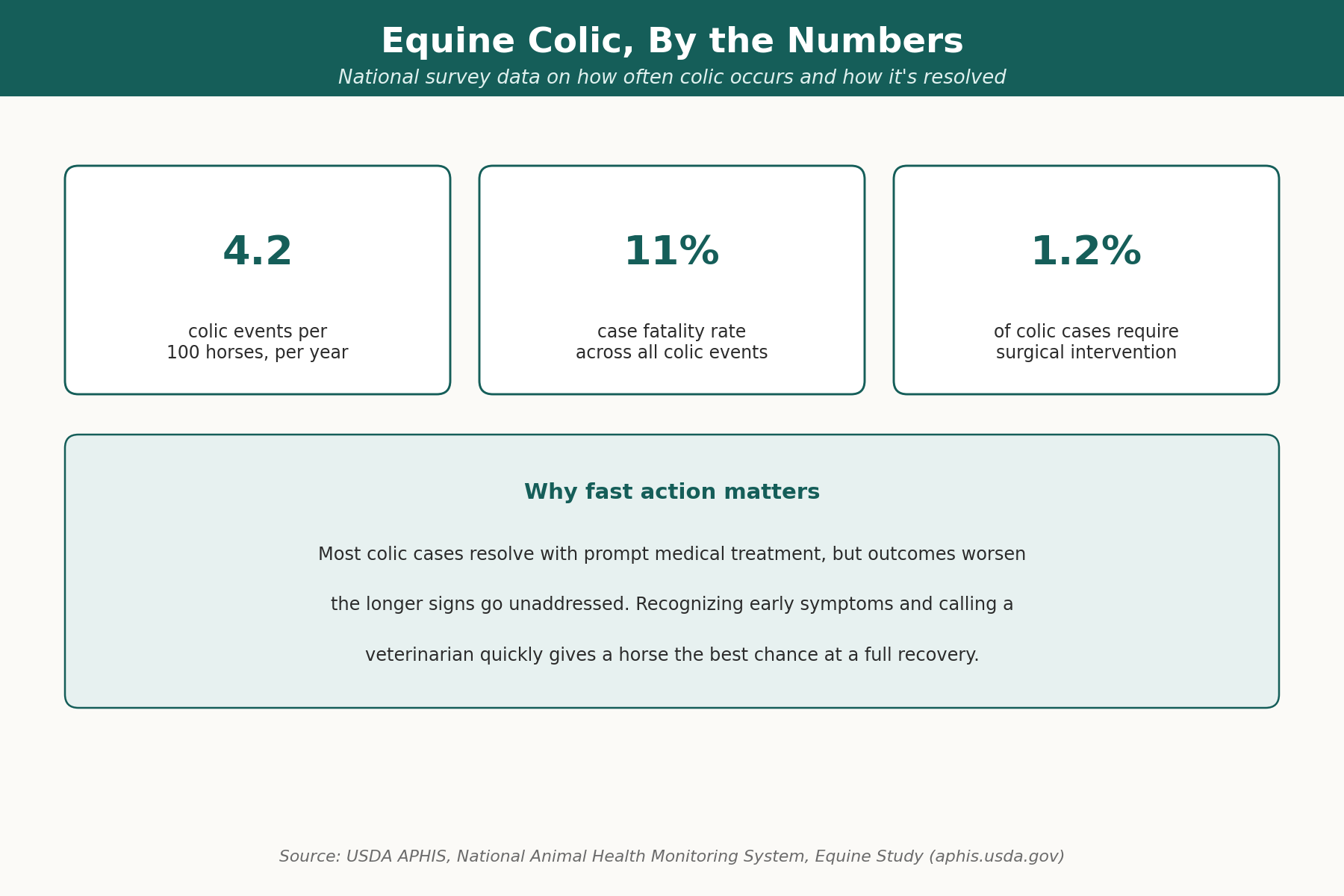
That information comes from a national colic incidence study conducted by USDA APHIS. The numbers make one thing clear: most colic cases are manageable with prompt veterinary attention, but outcomes tend to worsen the longer symptoms go unaddressed. Signs of colic can include pawing, rolling, looking at the flank, reduced manure output, sweating, and a noticeably distressed posture. When in doubt, it is always safer to call a veterinarian than to wait and see.
Reproductive Veterinary Services
Reproduction plays a major role in large animal medicine, particularly for cattle producers and horse owners involved in breeding. Veterinary involvement can include breeding soundness exams, pregnancy checks, monitoring during gestation, and assistance if complications arise during delivery.
Reproductive success affects more than just the next generation of animals. For a cattle operation, calving rates and reproductive efficiency have a direct effect on overall productivity and profitability. Having an established relationship with a veterinary team makes it far easier to get guidance quickly when breeding questions or complications come up.
Diagnosing and Treating Illness or Injury in Large Animals
Even excellent preventive care cannot eliminate every illness. Large animals can develop respiratory infections, digestive disorders, injuries, and reproductive complications that require an accurate diagnosis before treatment can begin. Owners should watch closely for changes such as:
- Refusing food or water
- Difficulty standing or rising
- Sudden or severe lameness
- Changes in breathing pattern
- Persistent diarrhea
- Signs of abdominal discomfort
- Unexplained weakness
- Sudden behavioural changes
- Bleeding or serious wounds
- Complications during pregnancy or delivery
Prompt veterinary evaluation, sometimes including bloodwork or imaging, gives an animal the best chance of a straightforward recovery instead of a prolonged one.
Herd Health Management and Biosecurity
Large animal veterinary medicine is not always about treating one animal at a time. For cattle producers especially, looking at health patterns across an entire herd can reveal issues that would be easy to miss when evaluating animals one by one. A solid herd health strategy typically addresses:
- Vaccination scheduling and timing
- Parasite control across the group
- Reproductive performance tracking
- Protocols for introducing new animals safely
- Biosecurity practices to limit disease spread
- Recurring or seasonal health concerns
The goal is a proactive system that reduces preventable problems rather than one that only reacts once an animal is already sick.
Medication and Treatment Guidance
Giving a large animal medication involves more than picking something off a shelf and hoping for the best. Dosing, timing, and drug interactions all matter, and a veterinarian can recommend the right product along with clear instructions for safe use. This is part of a broader range of veterinary services that covers everything from preventive medications to emergency treatment protocols.
Professional guidance becomes especially important when symptoms could point to several different causes. Treating an animal based on guesswork alone can delay the right care and allow an underlying condition to get worse.
Why Regular Veterinary Care Matters
Large animals are often remarkably tough, which can unfortunately make health problems harder to spot until they have already progressed. Regular veterinary attention adds another layer of protection and builds a health history that becomes genuinely useful the next time a question comes up. Consistent care helps owners:
- Detect health problems earlier
- Build an appropriate preventive care plan
- Stay current on vaccination schedules
- Manage parasite risks proactively
- Monitor reproductive health over time
- Respond quickly when conditions change
- Get professional guidance on medication and treatment
- Establish trust with a veterinary team before an emergency happens
That last point matters more than it might seem. Rolling Plains Veterinary Corporation supports a genuinely wide range of animals, from cattle and horses down to the family dog and cat, and owners who have veterinary care for a wide range of species already lined up tend to have a much calmer experience when something unexpected comes up.
How to Choose a Large Animal Vet in Manitoba
Selecting the right veterinarian involves more than picking the closest clinic. Large animal owners should look for a team that understands the specific needs of cattle, horses, and whichever other species they care for, along with a track record that includes emergency response, clear communication, and a genuine willingness to answer questions.
Veterinary care works best as a partnership. Owners contribute daily observations about their animals, while veterinarians bring medical training, diagnostic tools, and hands-on experience. The strongest working relationships tend to form long before an emergency ever happens.
Frequently Asked Questions
What animals does a large animal vet in Manitoba treat?
Large animal veterinarians commonly treat cattle, horses, and other livestock, though the exact species treated can vary by clinic. Rolling Plains Veterinary Corporation provides care for cattle and horses in addition to dogs and cats.
How often should cattle receive veterinary care?
The right schedule depends on herd size, the age and purpose of the animals, disease risk in the area, and any existing health concerns. A veterinarian can recommend a preventive schedule suited to your specific operation.
How often should my horse see a veterinarian?
Most horses benefit from at least one wellness exam per year, with core vaccines given annually. Horses that travel, compete, or board with other animals may need more frequent visits and additional risk-based vaccines.
What are the warning signs that a large animal needs veterinary attention?
Watch for appetite changes, breathing difficulty, persistent coughing, abnormal movement, severe lameness, wounds, swelling, digestive upset, unusual behaviour, weakness, or clear signs of pain.
When should I call an emergency veterinarian for a large animal?
Call promptly for severe trauma, major bleeding, breathing problems, inability to stand, intense pain, sudden neurological symptoms, reproductive complications, or any other rapidly developing health concern, including suspected colic in horses.
Why is preventive veterinary care so important for cattle and horses?
Preventive care helps reduce disease risk, catch problems earlier, support herd-wide health, manage parasites, and keep vaccination schedules on track before a minor issue turns into a serious one.
Does Rolling Plains Veterinary Corporation treat both large and small animals?
Yes. The clinic provides veterinary care for animals ranging from dogs and cats to cattle and horses, including preventive services and treatment for urgent conditions.
Whether you are managing a cattle herd, caring for a horse, or looking after the family dog and cat as well, having a trusted veterinary team nearby brings real peace of mind. Our clinic locations across the region are set up to support cattle producers and horse owners with both preventive visits and urgent care, and the team at Rolling Plains Veterinary Corporation is glad to answer questions before an emergency ever comes up, not just after. If you have cattle, horses, or any other large animal that needs attention, contact our clinic team and we will help you find the right next step.
Categorised in: Cattle Care, Horse Care
This post was written by Dr. Marc Phillipot

Comments are closed here.