
How Often Should Pets Go to the Vet? A Dog and Cat Guide
November 19, 2026 3:43 pmHow often should pets go to the vet? Most healthy adult dogs and cats need one exam a year, puppies and kittens need a visit every few weeks until their vaccine series is finished, and senior pets need an exam about every six months. Age, species, and lifestyle all change the answer, so here is the full schedule stage by stage, along with vaccine timing, typical costs, and the warning signs that should never wait for the next checkup.
How Often Should Pets Go to the Vet?
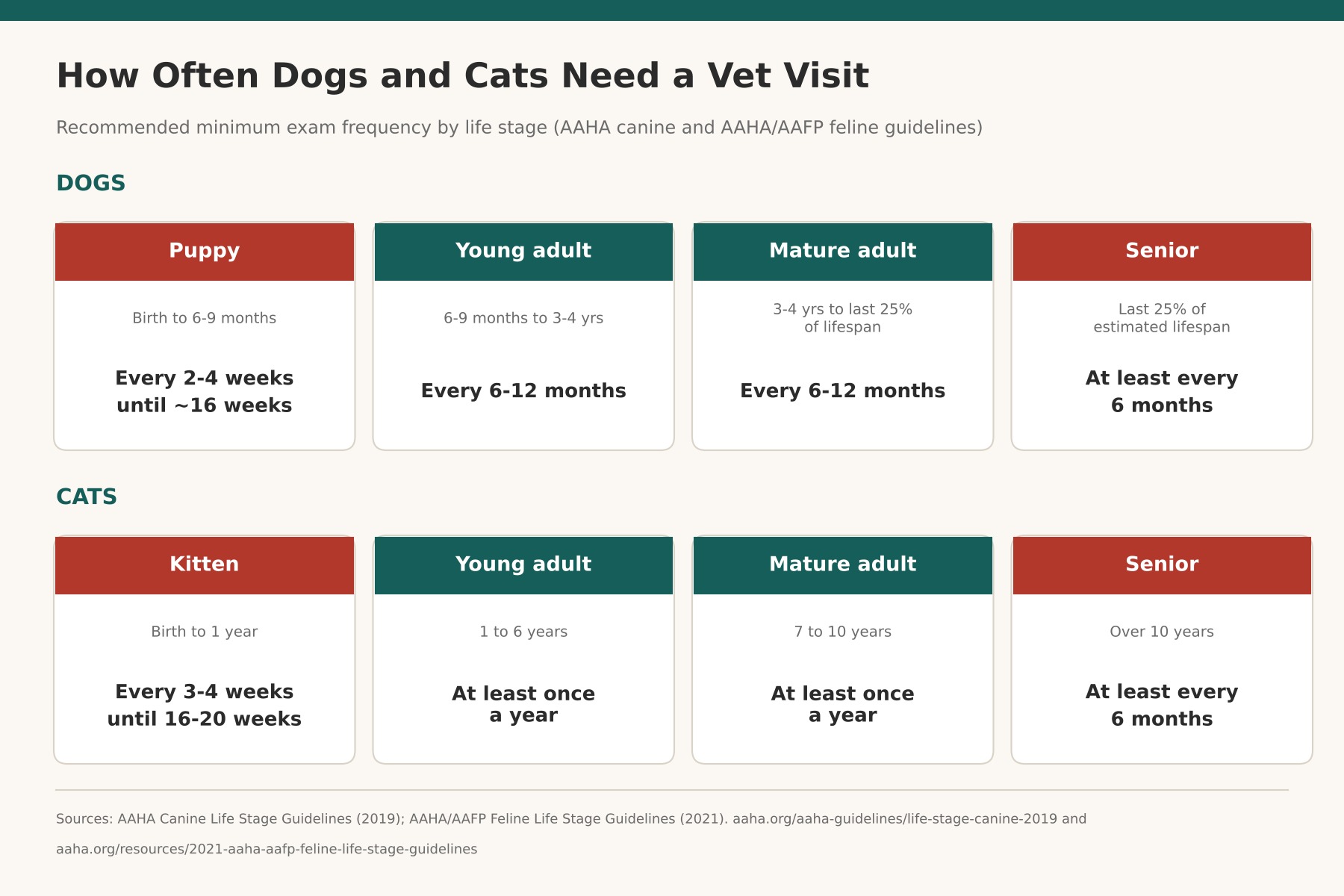
Healthy adult dogs and cats should see a vet at least once a year, puppies and kittens every 2 to 4 weeks until about 16 weeks old, and senior pets at least every 6 months.
Those intervals follow the AAHA canine life stage guidelines, which call for visits every 6 to 12 months for dogs of any age, and the AAHA and AAFP feline guidelines, which set a minimum of one exam a year for every cat and at least two a year for seniors. Use the table below to find your pet’s stage.
| Life Stage | Dogs | Cats | What the Visit Covers |
|---|---|---|---|
| Puppy or kitten | Birth to 6-9 months. Vaccine visits every 2-4 weeks until about 16 weeks | Birth to 1 year. Vaccine visits every 3-4 weeks until 16-20 weeks | Core vaccines, deworming, fecal test, growth and dental development |
| Young adult | 6-9 months to 3-4 years. Every 6-12 months | 1 to 6 years. At least once a year | Full exam, boosters, parasite prevention, weight check |
| Mature adult | 3-4 years to the last quarter of lifespan. Every 6-12 months | 7 to 10 years. At least once a year | Baseline blood and urine tests, joint and dental review |
| Senior | Last 25% of lifespan. At least every 6 months | Over 10 years. At least every 6 months | Blood work, urinalysis, mobility, kidney and thyroid screening |
Why Regular Vet Visits Matter for Dogs and Cats
Regular exams catch illness before it shows, because pets hide pain and early disease far better than most owners expect.
Cats are especially good at concealing illness, and a dog with early kidney changes or dental disease often still eats and plays normally. A yearly exam lets your veterinarian spot a small change in weight, heart sounds, joints, or teeth that you would never see at home.
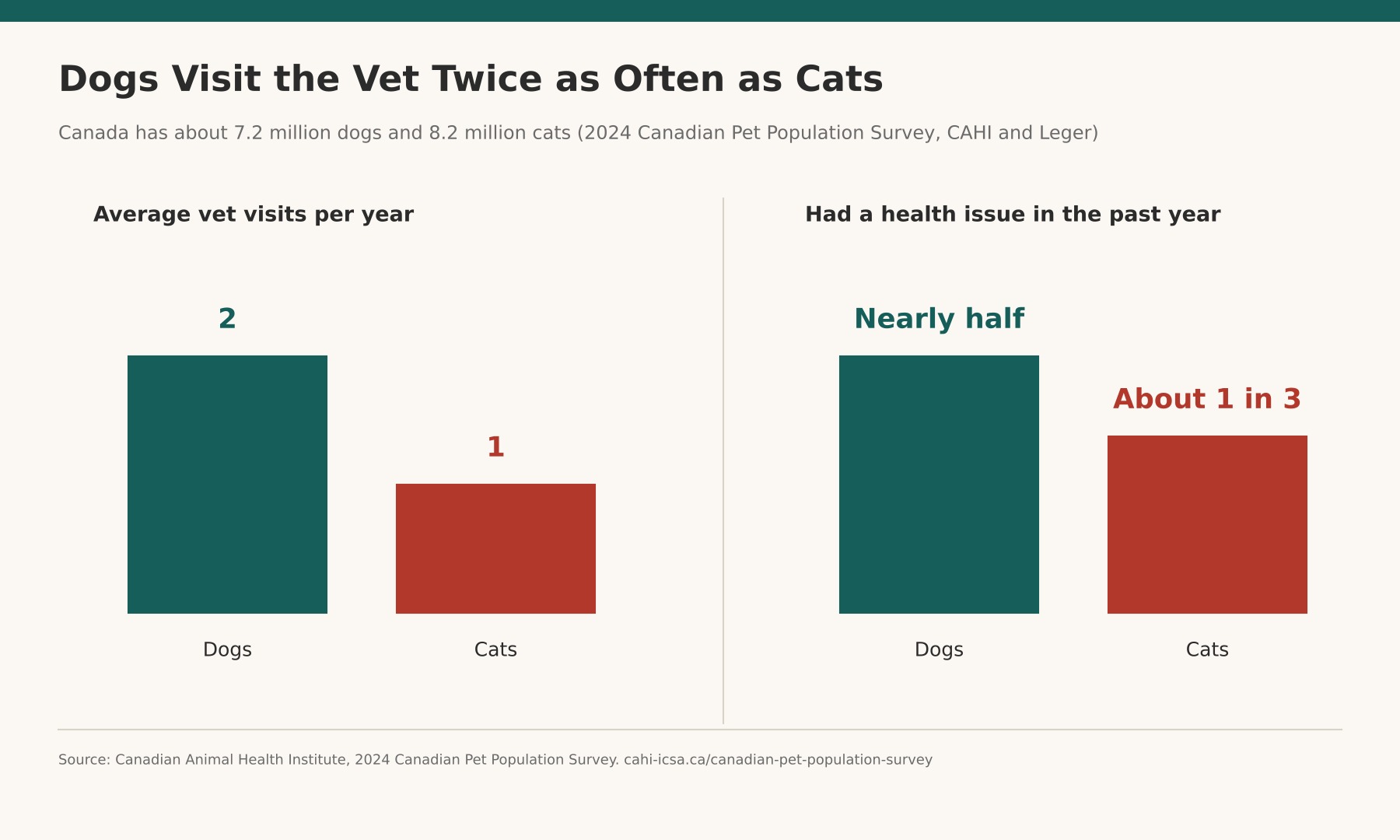
Canadian pets do not all get that attention equally. The Canadian Animal Health Institute’s 2024 survey found dogs averaged two vet visits a year while cats averaged one, and nearly half of dogs and about one third of cats had a health issue in the past year. Earlier peer-reviewed analysis of CAHI data showed the same gap: 86% of dogs but only 61% of cats had seen a vet in the previous 12 months.
Consistent visits also build a written baseline. When your vet can compare this year’s weight, bloodwork, and dental findings against last year’s, a slow decline stands out as an early warning instead of a surprise. Rolling Plains Veterinary Corporation keeps each pet’s records available across all three clinics, so that history follows your animal from visit to visit.
Prevention is also usually cheaper than reaction. An annual exam and current vaccines cost far less than emergency surgery or long-term management of a disease that went unnoticed for a year.
Puppy and Kitten Vet Visit Schedule
Puppies and kittens need a vet visit every 2 to 4 weeks between roughly 6 and 16 weeks old to complete their first vaccine series.
Puppy Vet Schedule for the First Year
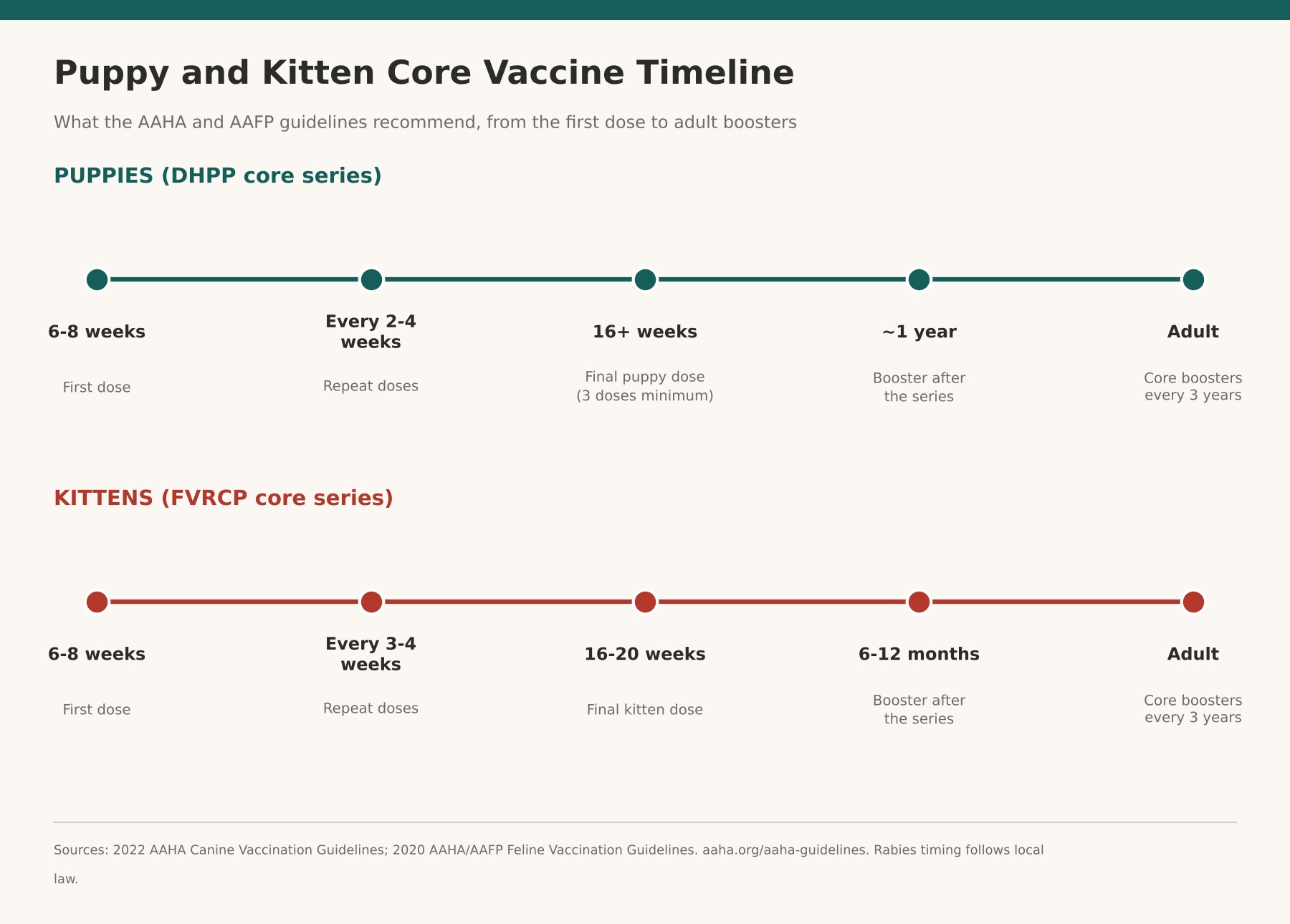
Puppies start core vaccines at 6 to 8 weeks of age. The AAHA canine vaccination guidelines call for at least three doses of the combination vaccine between 6 and 16 weeks, spaced 2 to 4 weeks apart, with the final dose at 16 weeks or older. A booster follows within a year, and the combination vaccine then moves to a 3-year interval. Rabies follows local law, and your vet will advise on lifestyle vaccines based on where your puppy lives and plays.
These early visits also cover growth, deworming, and fecal testing. AAHA’s diagnostic guidance lists four fecal tests in the first year, since intestinal parasites are common in young dogs. Booking dog wellness exams early also teaches your puppy that the clinic is a calm, familiar place.
- Core puppy vaccines: distemper, adenovirus, and parvovirus in a combination vaccine, plus rabies as required by law and leptospirosis, which AAHA now lists as a core vaccine.
- Parasite control: deworming, fecal screening, and a monthly prevention plan matched to your puppy’s exposure.
- Growth checks: weight gain, dental development, and joint health at every visit.
- Handling practice: gentle, repeated exams so adult checkups are low stress.
Kitten Vet Schedule for the First Year
Kittens receive their first FVRCP vaccine at 6 to 8 weeks, then repeat doses every 3 to 4 weeks until they are 16 to 20 weeks old. The AAHA/AAFP feline vaccination guidelines suggest considering a booster at about 6 months, then every 3 years for the core combination. Feline leukemia vaccination is also considered core for kittens through their first year, and rabies follows local law.
Indoor kittens still need this series. Panleukopenia and respiratory viruses can reach an indoor cat through the household, and the AAFP recommends core vaccines for all cats. Our team offers low-stress feline visits so your kitten learns that carriers and exam tables are nothing to fear.
How Often Should Adult Dogs and Cats See a Vet?
Healthy adult dogs and cats should have a full physical exam at least once a year, and many veterinarians suggest every 6 to 12 months for dogs.
Adult pets often look perfectly healthy while a dental, joint, or organ problem develops quietly. The annual exam is the point where your vet looks past the surface and compares today’s findings with your pet’s baseline.
What Happens at an Annual Wellness Exam
An annual wellness exam is a head-to-tail physical plus a prevention review tailored to your pet’s lifestyle.
| Exam Component | What Your Vet Checks |
|---|---|
| Physical exam | Eyes, ears, teeth, heart, lungs, abdomen, joints, skin, and coat |
| Vaccines | Boosters due on the core schedule, plus any lifestyle vaccines |
| Parasite screening | Annual fecal exam, and annual heartworm and tick-borne disease testing for dogs |
| Blood and urine tests | Annual bloodwork and urinalysis for mature adult dogs to check organ function |
| Dental assessment | Tartar, gum inflammation, and signs of periodontal disease |
| Weight and nutrition | Body condition score and diet adjustments |
Indoor Pets, Outdoor Pets, and Farm Dogs
Lifestyle changes what your vet looks for, not whether your pet needs a yearly exam.
A farm dog working around livestock, an outdoor barn cat, and a strictly indoor lap cat face different exposure to ticks, fleas, wildlife, and infectious disease. The annual exam is where vaccine and parasite protocols are adjusted for those risks. Rolling Plains Veterinary Corporation treats household pets and working animals side by side through its full range of veterinary services, and our mobile units can come to your farm to save you the trip. If you also keep cattle, horses, or goats, ask about on-farm livestock care so one team can plan for the whole operation.
Senior Pet Vet Visits and Aging Care
Senior dogs and cats should see a vet at least every 6 months, because age-related disease can progress between yearly exams.
How Often Should Pets Go to the Vet as They Age?
Seniors need twice-yearly exams. The AAHA Senior Care Guidelines recommend routine visits and a minimum laboratory database every six months for senior pets, which is roughly the equivalent of a person seeing a doctor every 2 to 3 years. You can read the full AAHA senior care recommendations in the Journal of the American Animal Hospital Association.
During a senior exam your vet pays close attention to mobility, weight, dental comfort, and behavior. AAHA recommends comprehensive chemistry, blood counts, and urinalysis every 6 to 12 months for senior dogs. Conditions such as arthritis, kidney disease, hyperthyroidism in cats, and cognitive decline tend to build slowly, and early management is usually simple: a diet change, a targeted medication, or an adjustment at home that keeps your pet comfortable.
Size, Breed, and Lifespan Change the Timeline
Senior status depends on how much of your pet’s expected lifespan is left, not on a single birthday.
AAHA defines a senior dog as one in the last 25% of its estimated lifespan, so a giant breed reaches that stage years before a small breed does. For cats, the AAFP counts the senior stage from age 10 onward. If you are not sure which stage your pet is in, your vet can tell you at the next exam and set the right schedule.
Getting to a clinic twice a year can be difficult during calving season or a long winter. Our team schedules visits around your workload, and mobile units can come directly to your farm when travel is the barrier.
Signs Your Pet Needs a Vet Visit Before the Next Checkup
Call your vet promptly if your pet shows sudden changes in behavior, breathing, appetite, or bathroom habits, rather than waiting for the next scheduled exam.
- Behavior changes: unexplained lethargy, hiding, unusual aggression, or crying out in pain.
- Digestive trouble: persistent vomiting or diarrhea, or no appetite for more than 24 hours.
- Breathing and mobility problems: labored breathing, coughing, choking, sudden limping, or weakness.
- Bathroom changes: straining to urinate, blood in the urine, or a sharp increase in thirst and urination.
- Possible toxin exposure: any chewed medication, chocolate, antifreeze, or rodent bait.
If your pet eats something toxic, call the nearest clinic immediately. We can prepare for your arrival or walk you through first steps over the phone, and your pet’s records are on hand to support fast decisions.
How Much Do Routine Vet Visits Cost?
For a dog, the Ontario Veterinary Medical Association’s 2025 provincial averages put an annual exam with vaccines at $214, with parasite prevention, blood work, and testing adding several hundred dollars more.
| Annual Preventive Care Item (Dog) | Average Cost (CAD) |
|---|---|
| Parasite prevention | $238 |
| Exam with vaccines | $214 |
| Wellness blood work | $174 |
| Heartworm and Lyme test | $125 |
| Fecal exam | $66 |
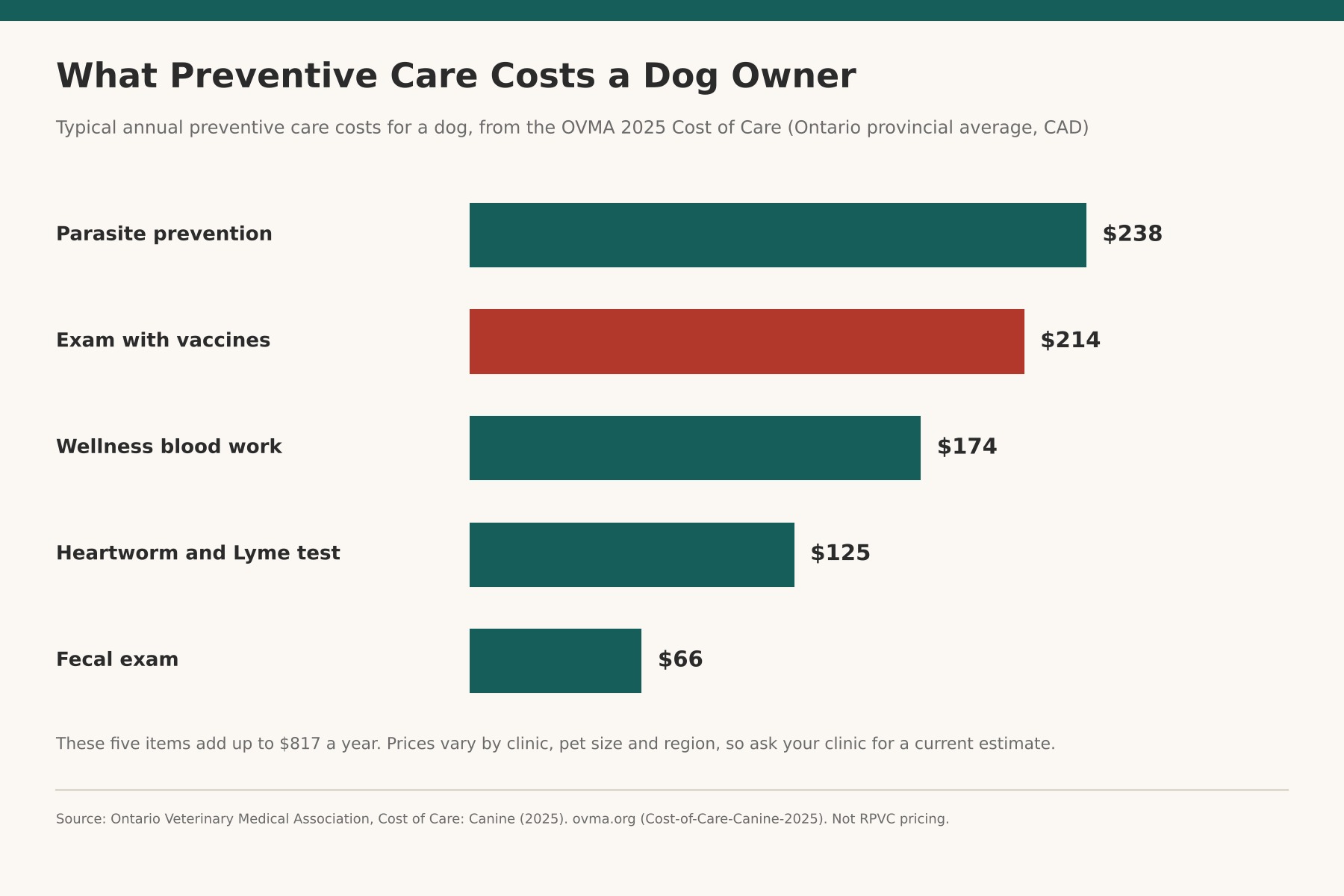
These figures are an Ontario provincial average, not RPVC fees, and your total depends on your pet’s size, age, and needs. Services at our clinics are provided individually rather than bundled into wellness plans, so each visit is built around what your pet actually requires at that stage. To get a current estimate before you book, request a fee estimate from the clinic nearest you.
Ways to Keep Preventive Care Affordable
- Keep the yearly exam on the calendar: catching a problem early almost always means a simpler, cheaper treatment.
- Ask for an itemized estimate: knowing what each test and vaccine costs lets you plan ahead.
- Stay current on parasite prevention: monthly prevention costs far less than treating heartworm or a tick-borne infection.
- Do not skip dental checks: early dental care is much cheaper than extractions for advanced disease.
Book Your Pet’s Next Exam at a Rolling Plains Clinic
Rolling Plains Veterinary Corporation has three clinics, and each one can set up your pet’s next wellness exam, vaccine visit, or senior checkup.
| Clinic | Address | Phone |
|---|---|---|
| Saint Claude clinic details | 127 PTH 2 E, Saint Claude | (204) 379-2374 |
| Notre Dame de Lourdes clinic details | 185 Provincial Rd. 244S, Notre Dame de Lourdes | (204) 248-2310 |
| Carman clinic details | 1-195 Main St S, Carman | (204) 745-3127 |
Whether you are raising a new puppy outside Carman, caring for an aging barn cat near Notre Dame de Lourdes, or keeping a house dog healthy in Saint Claude, the schedule above gives you a clear starting point. One of our clients put it this way:
“I have to say that the staff and veterinarian at Saint Claude vet clinic are some of the best, most caring, and empathetic people I have ever dealt with in times of panic over my pet’s health and sadness over a loss of a family member. I can’t say enough on how good they were to me and my pets.”
Eve Commando, local pet owner
Frequently Asked Questions About How Often Pets Need the Vet
How often should dogs go to the vet?
Healthy adult dogs should go to the vet at least once a year, and AAHA suggests every 6 to 12 months at any age. Puppies need visits every 2 to 4 weeks until about 16 weeks, and senior dogs need an exam at least every 6 months.
How often should cats go to the vet?
Healthy adult cats should see a vet at least once a year, and senior cats over 10 years old at least every 6 months. Kittens need visits every 3 to 4 weeks until about 16 to 20 weeks old to finish their vaccine series.
How often should a puppy go to the vet in the first year?
A puppy should visit the vet every 2 to 4 weeks from 6 to 16 weeks old, then once more for a booster within a year of finishing the series. Fecal testing and deworming are usually added at those early visits.
Do indoor cats need to see the vet every year?
Yes, indoor cats need a yearly exam. Cats hide illness well, and dental disease, kidney changes, and weight loss can develop with no outward signs. Core vaccines are also recommended for indoor cats.
How much is a normal vet visit for a puppy?
A basic puppy exam commonly runs about $50 to $150 as a general industry estimate, and vaccines, deworming, and fecal testing add to that total. Because puppies need several visits, ask your clinic for an itemized estimate for the whole first-year series.
Where is the cheapest vet to go to?
Shelters, nonprofit clinics, and veterinary schools often charge less for basic services through subsidies. Full-service clinics cost more but offer detailed diagnostics, continuity of care, and a growing health record that matters when a pet ages or has an emergency.
Do vets demat cats?
Many vets do, but severe or painful matting may call for sedation or shaving to keep your cat safe and comfortable. Heavy mats can trap moisture and bacteria against the skin, so have a wellness exam if you are unsure.
What is the most expensive treatment for a dog?
Complex orthopedic surgery, emergency treatment for conditions like bloat, and long-term cancer care with chemotherapy or radiation are generally the costliest. Regular preventive care and screening are the most practical way to lower the odds of needing them.
What are veterinary services?
Veterinary services are the medical care provided to animals, including wellness exams, vaccinations, surgery, diagnostics, dentistry, and emergency treatment. They support companion animals and livestock from routine monitoring through complex procedures and long-term disease management.
Categorised in: Vet Facts & News
This post was written by Dr. Marc Philippot



Comments are closed here.