

How to Take Your Cat to the Vet With No Money: Your Options
March 6, 2023 6:09 pmVet care is important, but it can also be expensive, and a surprise bill is stressful when money is tight. If you are wondering whether you can take your cat to the vet with no money, the answer is often yes, as long as you reach out early and know which options to ask about. Cat owners in Manitoba and beyond have more choices than they realize, from payment plans to wellness plans to assistance programs.
Cats are experts at hiding illness, so waiting rarely makes things cheaper. The sooner a vet sees a problem, the more options you usually have. Here is how to get your cat the care they need without being caught off guard by the cost.
How to Take Your Cat to the Vet With No Money
Having no money saved does not mean your cat has to go without care. The most effective first step is simple: call a clinic and explain your situation honestly. A veterinary team that knows your budget can help you sort what is urgent from what can wait, and can point you toward ways to spread out the cost.
Can You Take Your Cat to the Vet With No Money?
In most cases, you can at least start the conversation. The AVMA’s guidance on financial assistance for veterinary care recommends talking to your veterinarian about payment plans, deferred payments, and financing or credit options. It also points out that some clinics cannot offer payment plans because past clients did not follow through on payments, so it is wise to ask before the visit rather than at the front desk with your cat in a carrier.
Whether you call a small animal clinic or a team offering veterinary care for pets, horses, and livestock, a few details help the team help you:
- What is happening with your cat and how long it has been going on
- Whether your cat is eating, drinking, and using the litter box normally
- How much you can pay today and what you would need to spread out
- Whether you have pet insurance or a wellness plan already
Why Is Vet Care for Cats So Expensive?
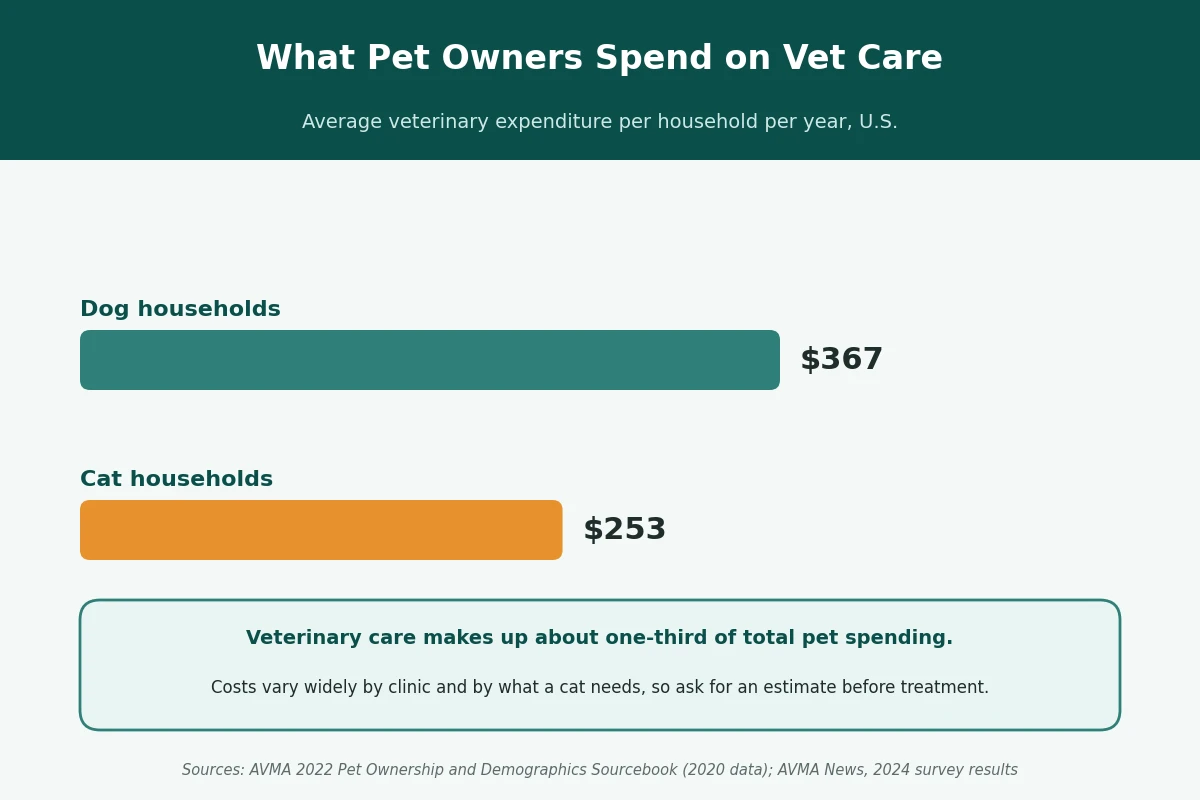
Veterinary medicine has grown far more advanced, and the tools behind it, such as imaging, blood work, surgery, and prescription medication, cost real money to provide. According to AVMA pet ownership statistics, the average U.S. household spent about $253 per year on veterinary care for cats and about $367 for dogs, based on 2020 data. Veterinary care also accounts for roughly one-third of total pet spending, according to AVMA’s 2024 survey results.
Source: AVMA, U.S. pet ownership statistics
Averages hide a wide range. A routine exam is a small expense, while a problem that needs testing, medication, or surgery can run into the hundreds or thousands. That unpredictability is exactly why a flexible plan matters more than a perfect budget.
Ways to Pay for Cat Vet Care
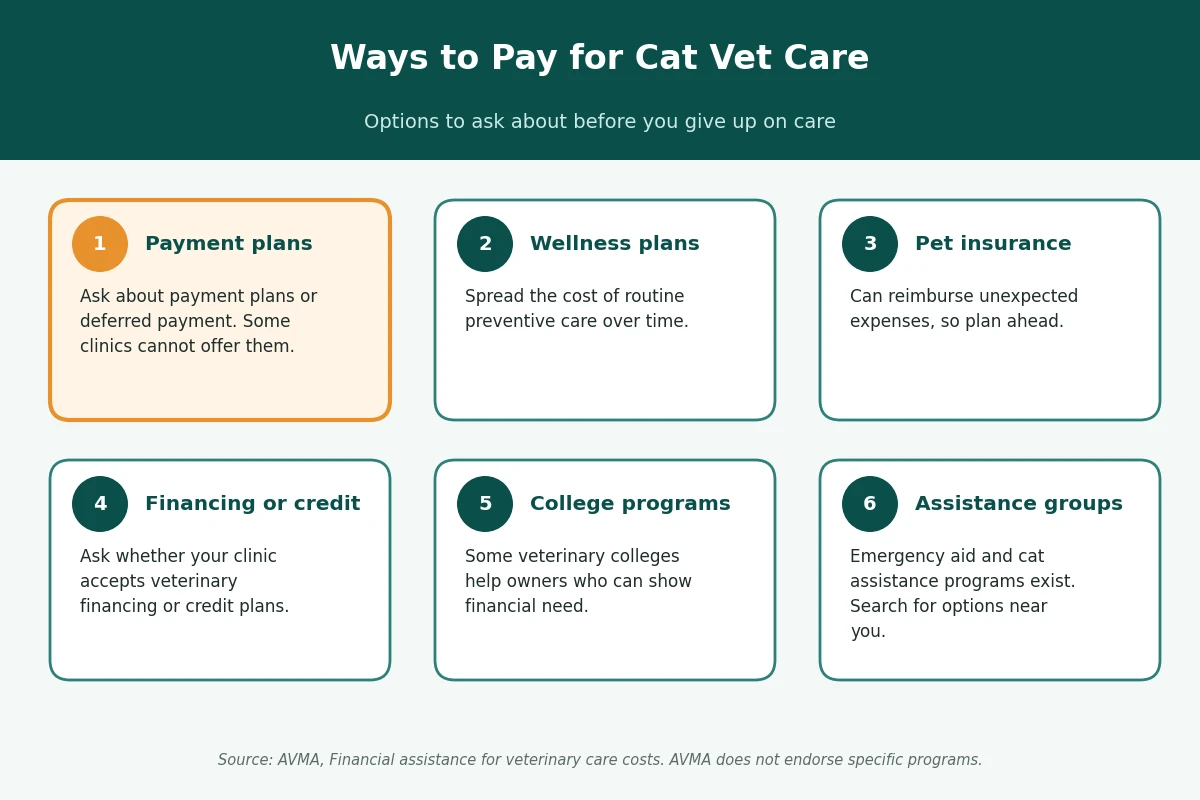
No single option fits everyone, so it helps to know the full menu. The AVMA lists several routes that owners can explore, and you can combine more than one.
Source: AVMA, Financial assistance for veterinary care costs
Payment Plans and Deferred Payment
Ask your vet or the billing team what payment arrangements exist. You do not always have to pay the full bill on the day of the visit, although not every clinic can offer this. Asking early, and being clear about what you can realistically pay, gives the team the best chance of finding something workable.
Pet Wellness Plans
A wellness plan spreads the cost of routine preventive care over a longer period, so a yearly checkup, vaccines, and dental cleanings fit into smaller payments. These plans generally cover routine care rather than emergencies, so ask exactly what is included and what it costs to enroll. If your cat sees the vet several times a year, a wellness plan can make those visits easier to afford.
Pet Insurance
Pet insurance can reimburse unexpected veterinary expenses, which takes pressure off emergency decisions. Premiums depend on your cat’s age, breed, and health history, and most policies do not cover conditions that existed before you enrolled and apply a waiting period. That means insurance works best when you buy it before a problem appears, and it may not pay off if your cat only sees the vet once a year for a checkup.
Veterinary Financing and Assistance Programs
Some clinics accept veterinary financing or credit plans, so ask what yours works with. Beyond that, the AVMA notes that certain veterinary colleges offer financial help to owners who can show need, and that emergency assistance programs exist, including some focused on cats. The AVMA does not endorse specific programs, so research any organization carefully before applying.
Preventing Problems Before They Get Expensive
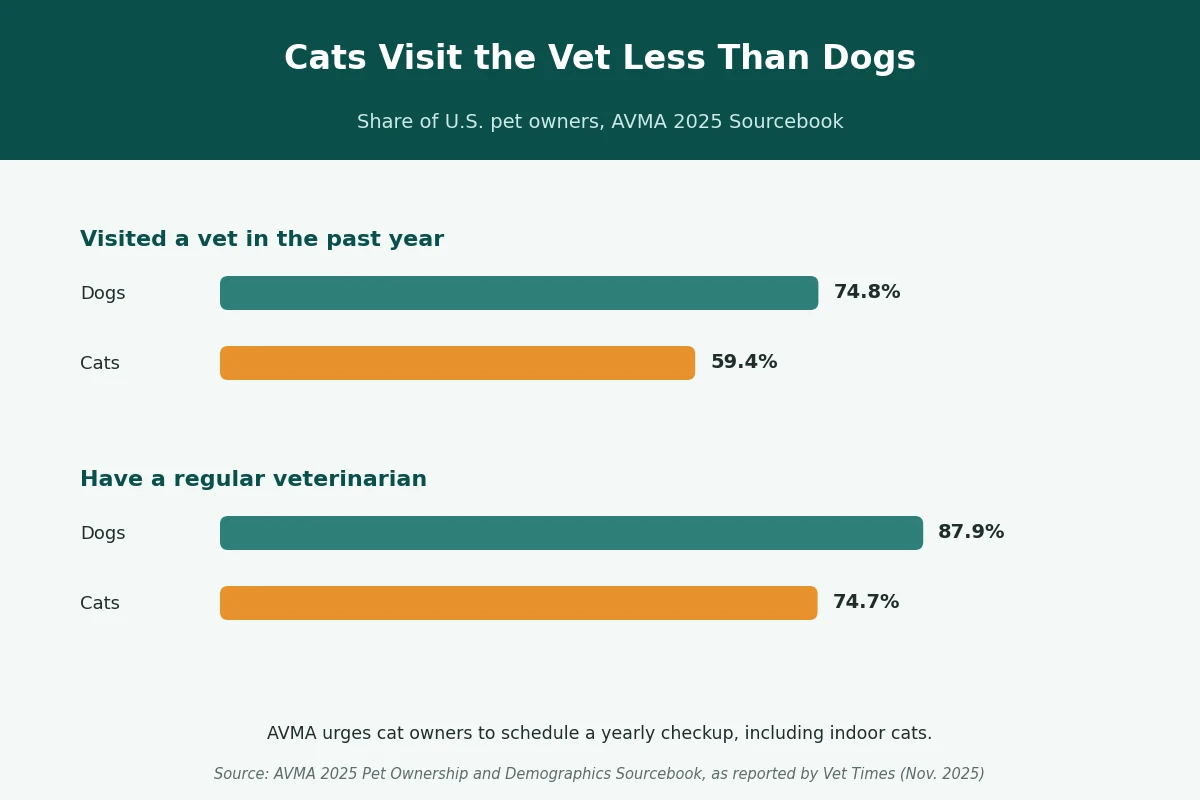
Prevention is the most reliable way to keep cat care affordable. Small problems found early, such as dental disease, weight gain, or early kidney changes, cost far less to manage than the same problems found late. Despite that, the AVMA’s 2025 sourcebook, as reported by Vet Times, found that only 59.4 percent of cat owners had visited a vet in the past year, compared with 74.8 percent of dog owners.
Source: AVMA 2025 Pet Ownership and Demographics Sourcebook, as reported by Vet Times
Indoor cats are not exempt. The AAHA and AVMA preventive healthcare guidelines caution against assuming an indoor cat does not need an annual exam. Routine cat checkups, vaccines, and preventive care catches issues while they are still simple to treat.
Low-Cost Ways to Keep Your Cat Healthy at Home
Daily habits make a real difference. Talk to your vet about what to do at home, and consider these basics:
- Choose the right food. Ask which diet suits your cat’s age and weight.
- Keep parasite prevention current. Fleas and ticks are far cheaper to prevent than to treat.
- Watch the litter box. Changes in urination or stool are often the first sign of trouble.
- Track weight and appetite. A quick weekly check can reveal slow changes.
- Keep vaccines and dental care on schedule. Routine care prevents bigger bills later.
When Your Cat Cannot Wait: Emergency Signs
Some situations are too urgent to put off while you sort out finances. Call a veterinary clinic right away if your cat shows any of these signs:
- Difficulty breathing, open-mouth breathing, or panting while at rest
- Straining to urinate, or producing little or no urine, especially in a male cat
- Collapse, seizures, or inability to walk
- Severe bleeding, deep wounds, or a serious fall or attack
- Suspected poisoning or swallowing something toxic
- Repeated vomiting, or refusing food and water
Breathing problems are especially urgent. The Cornell Feline Health Center advises getting a cat to a veterinarian right away whenever there is any question about its ability to breathe comfortably, and not trying to solve it at home. In an emergency, call first, tell the team what is happening, and explain your budget so they can focus on the most important care first.
How to Talk to Your Vet About Cost
A direct, calm conversation about money is normal and expected. These questions can help:
- Can I have a written estimate before we start?
- Which tests or treatments are essential today, and which can wait?
- Can treatment be done in stages?
- Are there lower-cost medication options?
- What payment options do you offer?
Affordable Vet Care for Cats in Manitoba
If you are looking for affordable care close to home, the best approach is to call the clinic nearest you and talk through your situation before the appointment. Tell the team what your cat needs and what you can manage, and ask what to expect at the visit. A short call often makes the first visit far less stressful.
It also helps to know what a clinic can offer. You can review the veterinary services available for cats and other pets ahead of time,.
Comfort matters too. When you meet our experienced veterinary team, asking for help with a hard budget feels easier.
Book a Cat Appointment at a Manitoba Veterinary Clinic
Rolling Plains Veterinary Corporation cares for cats at three Manitoba clinics. Choose the location closest to you, then call to talk about your cat and your options:
- Book a cat appointment in Carman, Manitoba
- Book a cat appointment in Notre Dame de Lourdes, Manitoba
- Book a cat appointment in St. Claude, Manitoba
Have a question first? Contact our veterinary team and tell us what is going on with your cat.
Frequently Asked Questions About Affording Cat Vet Care
Can I take my cat to the vet if I have no money?
Yes. Call a clinic, explain your situation, and ask what options are available. Many clinics can talk through payment plans, deferred payment, wellness plans, and which parts of your cat’s care are most urgent. Some clinics cannot offer payment plans, so it helps to ask before you book.
How do I get my cat to the vet when I have no money?
Start by calling your local clinic and being upfront about your budget. Ask for a written estimate, ask which steps are essential today and which can wait, and ask about payment options. If one clinic cannot help, ask whether they know of assistance programs or other clinics that can.
What if my cat is sick and I cannot afford the vet?
Do not wait if your cat is struggling to breathe, straining to urinate, collapsing, bleeding heavily, or has swallowed something toxic. Call a veterinary clinic right away, explain your finances, and ask what can be done first. Waiting often makes treatment more complicated and more costly.
Do vets offer payment plans?
Some do and some cannot. The AVMA notes that certain clinics are unable to offer payment plans or deferred payments, so the best approach is to ask your clinic’s billing team directly. Veterinary financing and credit plans may also be available.
Is pet insurance worth it for a cat?
It depends on your cat and your budget. Pet insurance can reimburse unexpected veterinary expenses, but premiums vary with age, breed, and health history, and most policies exclude conditions that existed before you enrolled. If you only visit the vet once a year, insurance may cost more than it returns.
What is the difference between pet insurance and a wellness plan?
Insurance is designed to help with unexpected illness and injury, while a wellness plan spreads the cost of routine preventive care, such as vaccines, checkups, and dental cleanings, over time. Some insurers offer wellness add-ons, and some clinics have their own plans.
How much is a vet visit for a cat without insurance?
The cost depends on the clinic and on what your cat needs. An exam is the starting point, and diagnostics such as blood work or imaging, medication, and procedures add to it. Ask for a written estimate before treatment so you know what to expect.
When is a cat emergency too urgent to wait?
Difficulty breathing, straining to urinate or producing little or no urine, collapse, seizures, severe bleeding, suspected poisoning, and serious injuries should be treated as emergencies. Call a veterinary clinic immediately and explain your situation.
Categorised in: Cat Care
This post was written by Dr. Marc Phillipot



Comments are closed here.