What Animals Do Vets Treat? A Guide to Pets, Horses, and Livestock
May 9, 2024 5:07 pmIf you have ever wondered what animals do vets treat, the answer reaches far beyond dogs and cats. Veterinarians care for family pets, horses, cattle and other livestock, and small animals such as rabbits, birds, and reptiles, and the species a clinic sees depends on where it is and who it serves.
Some clinics treat only cats and dogs. Others, known as mixed animal practices, move between the exam room and the barn in a single day. Knowing the difference makes it easier to find the right vet for your animal, whether that is a new puppy, a pair of pet rabbits, or a herd of beef cattle.
What Animals Do Vets Treat? A Species-by-Species Overview
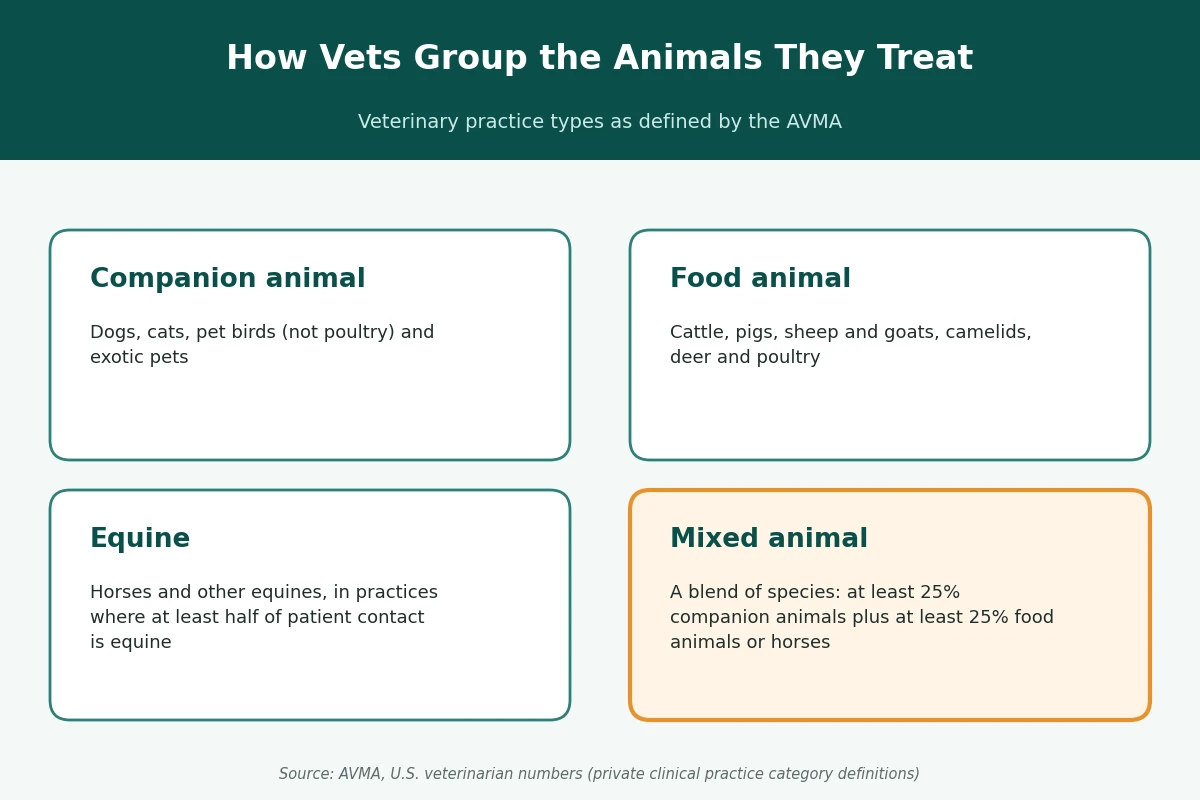
Veterinary medicine is not one size fits all. The American Veterinary Medical Association sorts practices by the animals they see most, using AVMA’s practice type definitions. Companion animal practices care for dogs, cats, pet birds, and exotic pets. Food animal practices focus on cattle, pigs, sheep, goats, camelids, deer, and poultry. Equine practices serve horses, and mixed animal practices combine several groups. Each area calls for different skills, equipment, and schedules.
Source: AVMA, U.S. veterinarian numbers
What Animals Do Vets Treat in a Mixed Animal Practice?
AVMA describes a mixed animal practice as one that sees varied species, with at least 25 percent of contact involving companion animals and at least 25 percent involving food animals or horses. In real life, that can mean small animal appointments in the morning, such as vaccines, dental problems, and sick visits, followed by herd work or a horse call in the afternoon.
These practices matter most in rural areas. AVMA’s economic report on the veterinary profession found that companion animal practices employ the largest share of veterinarians, about 60 percent, while food animal, equine, and mixed animal practices each employ under 5 percent. That is why finding a clinic that cares for both pets and large animals can take some effort, and why farm families value one team that handles everything.
Do Vets Treat All Animals?
No. Each species has its own anatomy, common diseases, and handling needs, so most veterinarians concentrate on a handful. Wildlife and unusual exotic pets often need someone with specific training or a licensed rehabilitator. A good clinic will tell you honestly when an animal falls outside its experience and will point you toward someone who can help.
Dogs and Cats: The Most Common Patients
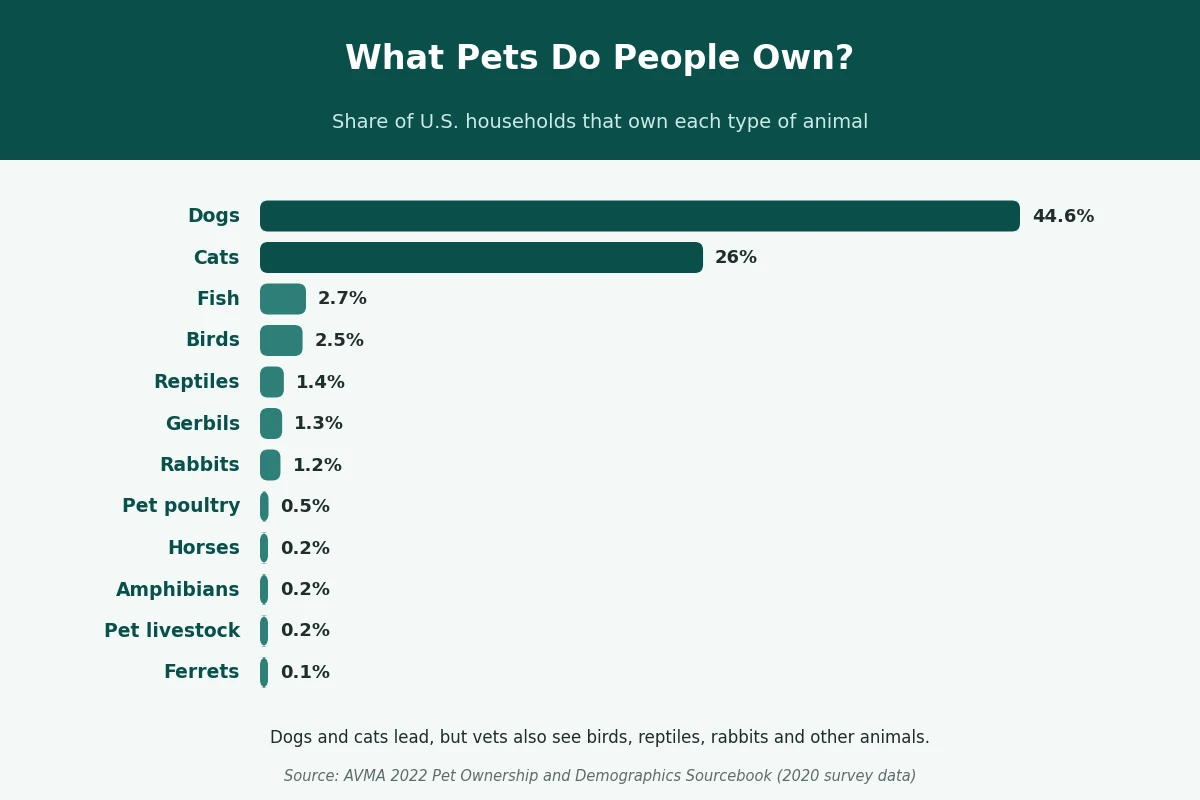
Dogs and cats fill most appointment books for a simple reason: they live in most homes. In the AVMA 2022 Pet Ownership and Demographics Sourcebook, 44.6 percent of U.S. households owned a dog and 26 percent owned a cat, far ahead of any other type of pet.
Source: AVMA U.S. pet ownership statistics
Vets care for dogs from puppyhood through the senior years. That includes vaccines, parasite prevention, dental care, injuries, skin and ear infections, digestive problems, and long-term conditions such as arthritis. Routine dog wellness exams, vaccines, and treatment catch problems early, when they are simpler and less costly to manage.
Cats are skilled at hiding illness, which makes regular exams even more important. The AAHA and AVMA preventive healthcare guidelines specifically warn against assuming an indoor cat does not need an annual exam. Common reasons cats see the vet include urinary issues, dental disease, weight changes, and kidney problems in older cats, and dedicated cat checkups and illness care keeps small changes from turning into emergencies.
Rabbits, Birds, Reptiles, and Other Small Companion Animals
Beyond dogs and cats, the same AVMA data shows that 2.7 percent of households own fish, 2.5 percent own birds, 1.4 percent own reptiles, and 1.2 percent own rabbits. These animals have very different needs from a dog or a cat, from diet and housing to the way they show pain. Rabbits, for example, have sensitive digestive systems and tend to hide illness, so a vet who knows them can spot dental and digestive problems sooner. Owners looking for veterinary care for rabbits should ask any clinic about its experience with small mammals, since some exotic species require a referral.
Horses: Specialized Equine Care
Horses are a small share of pet ownership, at 0.2 percent of U.S. households in the AVMA data, but they have outsized veterinary needs. Horses require specialized care and attention, and equine vets are trained to diagnose and treat problems that other species do not face in the same way. Typical reasons for a horse call include:
- Lameness and leg or hoof injuries
- Dental problems that affect eating and comfort
- Colic, which can become an emergency quickly
- Vaccinations and parasite control
- Routine wellness exams and preventive planning
Whether the horse is sick or simply due for preventive care, equine vet services for horses play a key role in keeping it healthy and sound.
Cattle, Goats, Sheep, and Other Livestock
Livestock are a major part of the work for many vets. Under Manitoba’s Animal Care Act, commercial animals include horses, cattle, sheep, swine, and live poultry, while a companion animal is any animal that is not a commercial animal. That legal line helps explain why large animal care is treated as its own area of veterinary work.
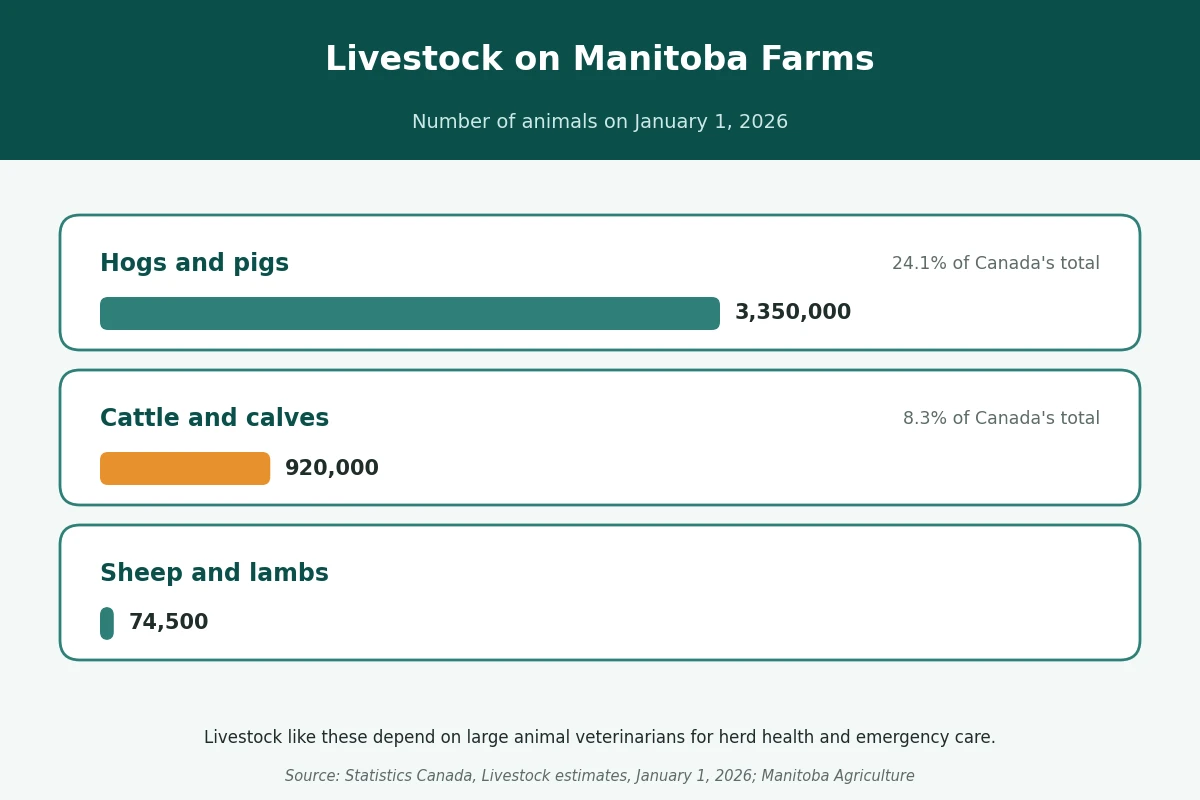
The numbers show how much work there is. According to Statistics Canada’s livestock estimates, Manitoba farms held about 920,000 cattle and calves, 3.35 million hogs, and 74,500 sheep and lambs on January 1, 2026. Manitoba’s cattle herd accounts for roughly 8.3 percent of the national total.
Source: Statistics Canada, Livestock estimates, January 1, 2026 and Manitoba Agriculture, Livestock on Farms
Cattle producers rely on vets for herd vaccination programs, calving help, injuries, and illness. Our livestock veterinary care for cattle herds also covers the preventive work that keeps a herd productive and reduces the need for costly treatments down the line.
Goats and sheep have their own health needs, from parasite control to vaccination schedules and kidding or lambing support. For small herds and hobby farms in particular, goat health care, vaccinations, and treatment from a vet who knows the species makes a real difference.
Why Large Animal Care Looks Different
Treating a cow or a horse is not a bigger version of treating a dog. Large animals are often examined where they live, so vets travel to farms and barns and think about the whole herd as well as the individual animal. Timing matters too, because livestock are often the livelihood of the farm family and a delay in treatment can be costly. A cow with a difficult birth or a horse with colic cannot wait for business hours, which is why emergency availability is a key question to ask any large animal vet.
Emergency and Preventive Care Across Species
The reasons animals see a vet differ by species, but the pattern is the same everywhere: prevention costs less than treating a problem that has been allowed to grow. Here is a quick look at common reasons for a visit:
| Animal | Common Reasons for a Vet Visit |
|---|---|
| Dogs and cats | Vaccines, wellness exams, dental disease, injuries, infections, long-term conditions |
| Rabbits and small pets | Dental and digestive problems, diet and housing advice, illness |
| Horses | Lameness, dental problems, colic, vaccines, wellness exams |
| Cattle | Herd vaccination, calving difficulties, injuries, illness |
| Goats and sheep | Vaccination, parasite control, illness, kidding and lambing support |
Preventive care for any species usually includes vaccinations, routine checkups, and guidance on nutrition and daily care. Emergencies, on the other hand, rarely announce themselves. Knowing which clinic to call, and whether it treats your animal, is one of the most useful things you can sort out ahead of time.
How to Find a Vet Who Treats Your Animal
Because no two practices see exactly the same species, a few direct questions will save you time and stress. Before you book, ask:
- Which species do you see regularly?
- Do you make farm calls, or do animals come to the clinic?
- What happens after hours and in emergencies?
- Can you care for every animal in my household?
- If you cannot treat my animal, who do you recommend?
If your household includes more than one kind of animal, a team offering multi-species veterinary care saves you from juggling several clinics. It also means one team gets to know your whole animal family.
You can see the full list of veterinary services for pets and farm animals before you call, and ask about care for a wide range of species if you have an animal that does not fit the usual categories.
Trust matters just as much as species. Take a moment to meet our experienced veterinary team so you know who will be caring for your animals.
Book an Appointment for Your Pets, Horses, or Livestock
Rolling Plains Veterinary Corporation cares for dogs, cats, horses, cattle and other livestock, goats, and rabbits across three Manitoba clinics. Choose the location closest to you to schedule a visit:
- Schedule a visit in Carman, Manitoba
- Schedule a visit in Notre Dame de Lourdes, Manitoba
- Schedule a visit in St. Claude, Manitoba
Not sure whether we treat your animal? Contact our veterinary team and we will help you find the right next step.
Frequently Asked Questions About the Animals Vets Treat
What animals do vets treat?
Veterinarians treat dogs, cats, horses, and livestock such as cattle, sheep, goats, pigs, and poultry. Many also see rabbits, birds, reptiles, and other small pets. The exact list depends on the practice, so it is always worth asking a clinic which species it sees.
What animals do veterinarians work with most often?
Companion animals. AVMA data shows companion animal practices employ the largest share of veterinarians, roughly 60 percent, while food animal, equine, and mixed animal practices each employ under 5 percent.
Do vets treat all animals?
No. Each species has its own anatomy, diseases, and handling needs, so most veterinarians focus on a few. Wildlife and unusual exotic pets often need a vet or rehabilitator with specific training, and a good clinic will refer you when an animal falls outside its experience.
What is a mixed animal practice?
AVMA defines a mixed animal practice as one that sees varied species, with at least 25 percent of contact with companion animals and at least 25 percent with food animals or horses. In practice, that often means family pets and farm animals are cared for by the same team.
Do farm vets treat dogs and cats?
Many do. Clinics that serve rural communities often care for household pets as well as livestock, because families with farm animals usually have dogs and cats too. Confirm with the clinic when you book.
Can a large animal vet treat my horse?
Horses need specialized care, including attention to lameness, dental health, and colic. Many large animal and mixed practices treat horses, but it is best to ask whether the clinic offers equine services before you book.
How do I know if a clinic treats my type of animal?
Ask directly. Call the clinic, name the species and your concern, and ask whether they see that animal, whether they make farm calls, and what happens after hours. If they cannot help, they can usually point you to someone who can.
Do vets treat animals in an emergency?
Most clinics handle emergencies for the species they see regularly, such as a cow with a difficult birth or a horse with colic. Ask about emergency and after-hours care before you need it so you know who to call.
Categorised in: Cat Care, Cattle Care, Dog Care, Goat Care, Horse Care
This post was written by Dr. Marc Phillipot


Comments are closed here.