How Often Should Cattle See a Veterinarian? A Guide for Manitoba Herds
September 30, 2026 8:50 pmWondering how often your herd needs a cattle vet in Manitoba? Most commercial beef herds benefit from two to four planned herd visits each year, timed around breeding, pregnancy checking, calving, and weaning. Planned visits keep small problems from turning into costly outbreaks.
There is no single calendar that fits every operation. A 50-cow herd on mixed pasture needs a different plan than a 500-head backgrounding yard, which is why the team at Rolling Plains Veterinary Corporation builds each herd plan around your goals, your facilities, and your season. A planned, preventive approach almost always beats calling for help only when animals are down.
How Often Should Cattle See a Vet Each Year?
Three things shape visit frequency: your production goals, your herd size, and your management system. Cow-calf herds typically plan visits around the reproductive cycle. Dairy herds, calf-raising operations, and backgrounding yards need closer contact because animals are mixed, moved, and stressed more often.
A Typical Annual Herd Health Schedule
The table below shows a common rhythm for a cow-calf operation. Your veterinarian will adjust the timing to your calving window and pasture plan.
| Season | Visit Focus | What Usually Happens |
|---|---|---|
| Late winter to early spring | Pre-breeding review | Bull breeding soundness exams, body condition review, and vaccination planning before turnout |
| Spring | Calf processing and turnout | Vaccines, parasite control, identification, and a review of pasture health risks |
| Late summer to fall | Pregnancy checking and weaning | Ultrasound or palpation, decisions on open cows, and weaning vaccines |
| Winter | Pre-calving review | Nutrition check, calving protocols, and cold-weather calf care planning |
Think of it like servicing your equipment before seeding. A little attention at the right time prevents a breakdown in the middle of the busy season. If you are not sure where your herd fits, our herd health and cattle care services are built around exactly these seasonal milestones.
Herd Health Planning That Prevents Outbreaks
Modern cattle medicine is built around veterinary herd health management, a routine, herd-level approach that aims to prevent disease before it shows up. Instead of treating one sick animal at a time, your veterinarian looks at the whole system: vaccines, nutrition, handling, housing, records, and biosecurity.
That work starts with a veterinary-client-patient relationship, which means your veterinarian knows your herd and your operation well enough to make sound medical decisions. It is also what allows a veterinarian to prescribe medications for your animals.
What a Written Herd Health Plan Includes
- Vaccination protocol: Products, timing, and boosters for cows, bulls, and calves, written down and reviewed each year.
- Treatment protocols: Clear steps for common illnesses so anyone on your crew can act quickly and consistently.
- Nutrition and body condition reviews: Checks before breeding, before calving, and before winter feeding begins.
- Parasite control: Products and timing matched to your pasture rotation and housing.
- Biosecurity rules: Guidance for new arrivals, shared equipment, visitors, and fence-line contact.
- Record keeping: Treatment, vaccination, and breeding records that make patterns easy to spot.
Your program should live in a written, reviewed document. It should not be a verbal agreement or a habit carried over from the previous owner. If you do not have one yet, our team can help you build it and review it each year.
Vaccination and Arrival Processing for Calves
Preventive medicine is where the economics of cattle health become clear. In backgrounding, the first 45 days bring the heaviest health challenges, and they depend on the number of calf sources, pre-conditioning or pre-immunization status, and the transport distance and handling stress calves have been through, according to Manitoba Agriculture.
Recommended Processing When Calves Arrive
Processing should happen as soon as calves arrive and before they are placed in their home pen. Once moved, calves should stay in that pen to reduce stress and exposure. Standard processing steps include:
- Temperature check: Take rectal temperatures on every calf and treat any calf above 40 degrees Celsius with a broad-spectrum antibiotic.
- Identification: Apply a permanent ear tag.
- Core vaccines: An IBR-PI modified live virus vaccine, plus a 7-way or 8-way clostridial vaccine that also covers Histophilus somni.
- Vitamin A and D injection: Given at processing.
- Parasite control: A systemic parasiticide or insecticide.
- Additional vaccines to discuss with your vet: BVD, BRSV, and Pasteurella, based on your local disease pressure.
Castration and dehorning are generally delayed for at least three weeks after arrival, because stacking procedural stress on top of arrival stress raises disease risk.
What Respiratory Disease Costs Per Case
Respiratory disease is the most common cause of illness and death in feedlot cattle, and it is one of the main reasons vaccination timing matters. The USDA reports that an estimated 16.2 percent of cattle placed in feedlots showed signs of respiratory disease at some point during the feeding period. The chart below compares the direct cost of treating common conditions, using data from the USDA APHIS Feedlot 2011 study.
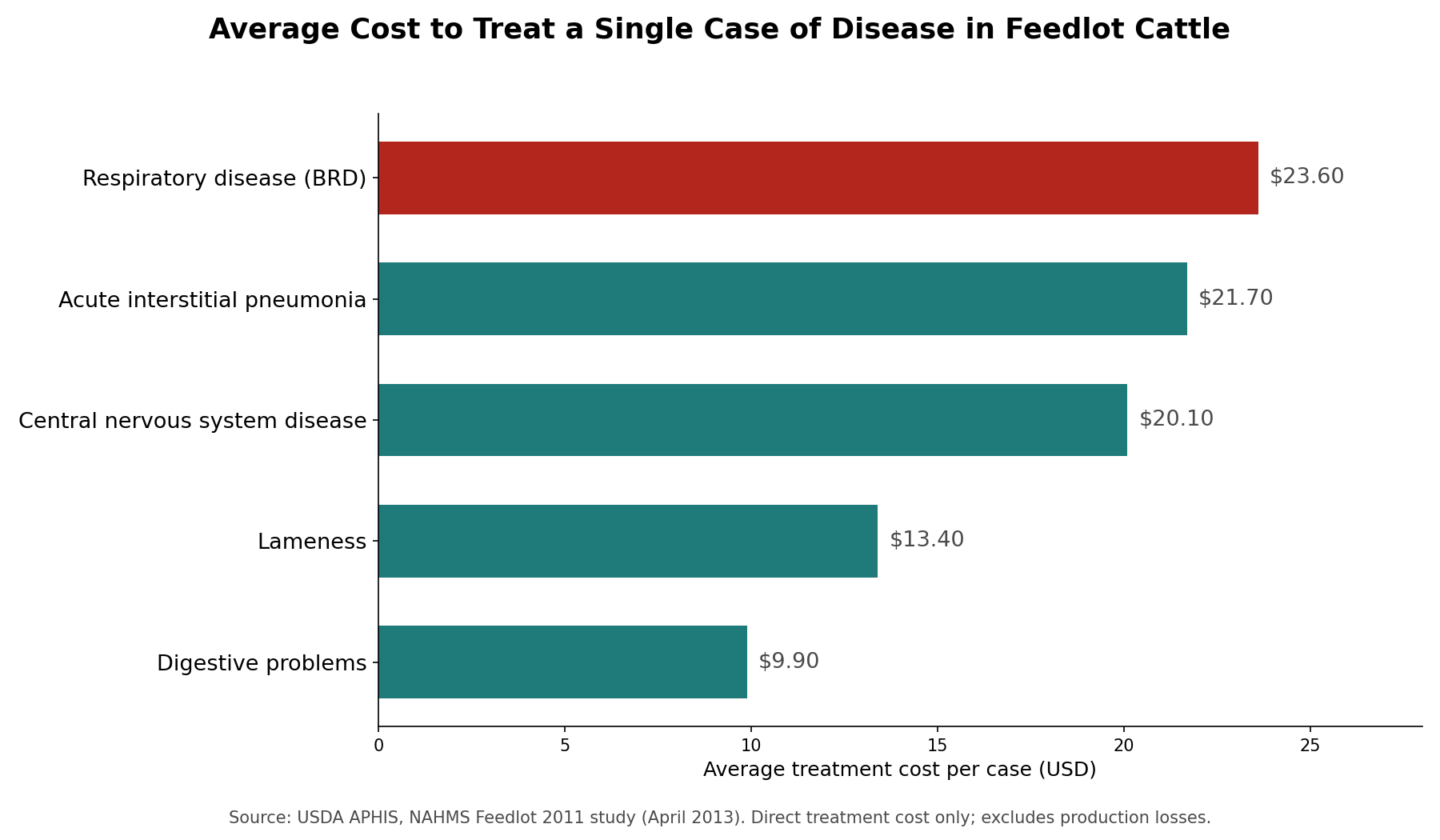
Those figures cover treatment only. They do not include lost weight gain, reduced feed intake, or death loss, so the true cost of one sick animal is higher. Spending on prevention is almost always the cheaper path.
Reproductive Care: Breeding Soundness and Pregnancy Checking
Many producers think of herd health as a reproductive service, and fertility is a big part of it. But limiting visits to breeding events leaves nutrition, calf health, and hoof care unmanaged until they become expensive. The most valuable reproductive checkpoints include:
- Bull breeding soundness exams: Confirm each bull is physically capable before the breeding season opens. Skipping this step is a common regret.
- Pregnancy detection: Ultrasound or manual palpation identifies open cows early, so you can make feed and culling decisions before winter.
- Herd disease screening: Conditions such as bovine viral diarrhea can quietly reduce conception rates.
- Pre-calving review: Nutrition, vaccination, and calving supplies checked before the first calf hits the ground.
Pregnancy checking is like taking inventory: knowing which cows are open lets you manage feed costs before the cold sets in. Our mobile unit can come to your farm to perform these checks and save you the trip. When you are ready to plan your breeding season, book a herd health consultation and we will map out a schedule that fits your calendar.
When to Call a Cattle Vet for Sick Cattle
Knowing when to call is a key skill in cattle management, and it starts with daily observation. Backgrounding guidance recommends checking calves at least twice daily for appetite, activity, and early signs of illness. An animal that ate well in the morning but looks hunched by evening has already lost ground.
When to Call a Cattle Vet Right Away
Some situations can wait for your next scheduled visit. Others cannot. Use this as a quick guide:
| Situation | Best Next Step |
|---|---|
| Calf with a rectal temperature above 40 degrees Celsius (104 degrees Fahrenheit) | Treat promptly and call your veterinarian to confirm the protocol |
| Animal off feed, hunched, or separated from the group | Call the same day for an exam |
| Bloat, difficulty breathing, or sudden lameness | Call immediately |
| Difficult calving or a retained placenta | Call immediately |
| Questions about vaccine timing, pasture changes, or a new feed | Book a routine herd visit |
Daily pen checks should also watch for lameness, foot rot, pink-eye, digestive upsets, and bloat. If a treated calf relapses, it should move to a hospital pen for follow-up care instead of going back in with the group. Getting an accurate diagnosis early gives treatment the best chance to work and helps you control drug costs.
Lab Testing Support for Herd Surveillance
Good herd decisions rely on good information. Provincial diagnostic services give producers access to specialized testing, and fees for food-producing animals are set well below companion animal fees. The chart below compares a few common tests, based on the provincial veterinary diagnostic fee schedule, which was effective April 25, 2024 and is subject to change.
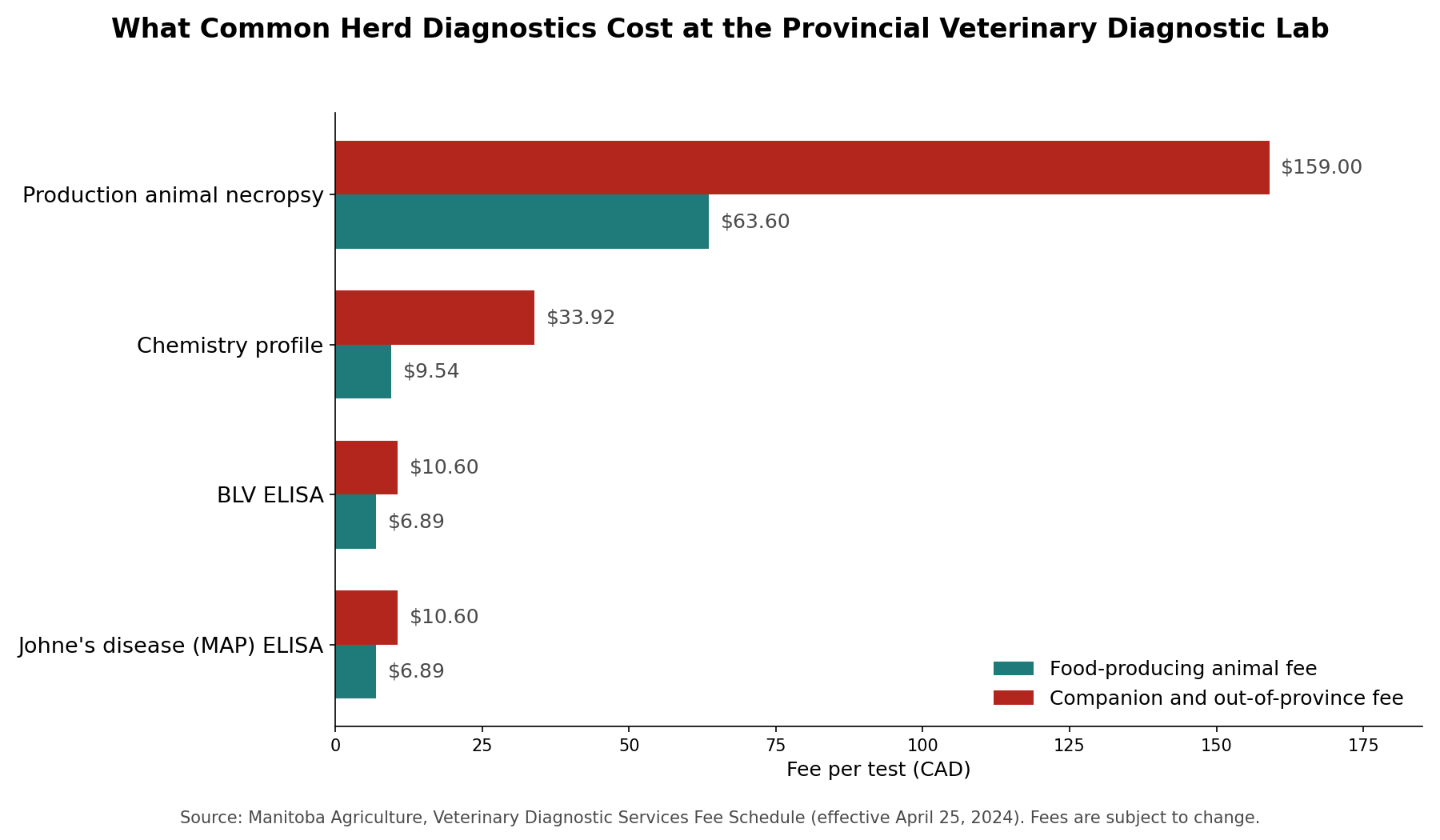
Low-cost screening makes routine surveillance practical for most operations. Bovine leukemia virus and Johne’s disease blood tests are each under seven dollars for food-producing animals, and a chemistry profile is under ten. A necropsy on a production animal is $63.60, compared with $159.00 for a companion animal. When an animal dies unexpectedly, a necropsy can tell you whether the rest of the herd is at risk.
Biosecurity and Quarantine for New Arrivals
Every new animal, shared trailer, or borrowed piece of equipment is a possible way for disease to enter your herd. Provincial biosecurity guidance and active disease surveillance are available to help you build a program, and you can review the provincial biosecurity resources alongside your veterinarian.
- Quarantine new arrivals: Keep them separate from the existing herd for a period set with your veterinarian before mixing.
- Limit fence-line contact: Shared fences are an easy route for respiratory and reproductive disease.
- Clean shared equipment: Trailers, chutes, and tools should be cleaned between groups.
- Control visitor traffic: Provide clean boots and keep visitors away from calving and sick pens.
- Buy carefully: Favor single-source, pre-conditioned animals whenever possible.
Our small and large animal veterinary services include on-farm consultations where we walk your facilities and recommend practical changes you can make without a major investment.
Questions to Bring to Your Next Herd Visit
A herd visit is most valuable when you come prepared. Jot down these questions before your veterinarian arrives:
- Which vaccines are due for cows, bulls, and calves, and do any products need to change?
- Are there patterns in treatments or death loss that point to a management issue?
- Is body condition where it should be heading into breeding, calving, and winter?
- Do our handling facilities make processing safe and low-stress for animals and people?
- Which diagnostic tests would give us useful information about the herd this year?
Frequently Asked Questions
How many times a year should a cow see a vet?
Most commercial beef herds do well with two to four planned herd visits a year, timed around pre-breeding, pregnancy checking, calving, and weaning. Dairy herds and backgrounding operations usually need more frequent contact. Your veterinarian can adjust the schedule to your herd size, goals, and management system.
What is a vet for cows called?
A veterinarian who works with cows is usually called a large animal veterinarian, a bovine veterinarian, or a cattle vet. These veterinarians focus on herd health, reproduction, and production medicine, and they often work on the farm instead of in the clinic.
Do healthy cattle still need routine vet visits?
Yes. Routine visits are where vaccination timing, parasite control, nutrition, breeding soundness, and biosecurity are reviewed before problems appear. Catching a small issue early is almost always cheaper than treating an outbreak or losing an animal.
What calf temperature means it needs treatment?
For newly arrived backgrounding calves, Manitoba Agriculture guidance treats any rectal temperature above 40 degrees Celsius (104 degrees Fahrenheit) as a reason to treat with a broad-spectrum antibiotic. Treated calves are returned to their home pen to limit stress, and relapsed calves move to a hospital pen. Confirm the treatment plan with your veterinarian.
Can a cattle vet come to my farm?
Yes. Our mobile unit can come to your farm for herd checks, pregnancy testing, calf processing, vaccinations, and sample collection. On-farm visits save you the stress of hauling animals and let your veterinarian see your handling facilities, pens, and pasture first hand.
What is a veterinary-client-patient relationship?
A veterinary-client-patient relationship, often shortened to VCPR, is a working relationship where your veterinarian knows your herd and your operation well enough to make sound medical decisions. It is the foundation for herd health planning and is needed before a veterinarian can prescribe prescription medications.
Book a Cattle Vet in Manitoba for Your Herd
Planned veterinary care is the foundation of a profitable cattle operation. It does not eliminate every health challenge, but it gives you the tools to manage them early, with a partner who knows your herd. If you would like to talk through your herd, our team is ready to help.
Choosing a Cattle Vet in Manitoba You Can Call in Any Season
Our mobile unit can come directly to your farm, saving you the stress of hauling animals and letting your veterinarian assess your herd in its real environment. Whether you need emergency support or want to schedule a routine herd check before the next production phase, choose the clinic closest to you or see all of our clinic locations.
- St. Claude: 127 PTH 2 E, (204) 379-2374
- Notre Dame De Lourdes: 185 Provincial Rd. 244S, (204) 248-2310
- Carman: 1-195 Main St S, (204) 745-3127
Book at St. Claude Book at Carman Book at Notre Dame de Lourdes
Prefer to start with a message? Request a Herd Health Assessment
Categorised in: Cattle Care
This post was written by Dr. Marc Phillipot
Comments are closed here.