Horse Emergency or Not? When to Call a Horse Vet in Manitoba
October 27, 2026 9:37 pmMost horse owners learn the difference between an ordinary off day and a true emergency the hard way, usually at night, usually with a long gravel road between the barn and the nearest clinic. Knowing when to call a horse vet in Manitoba comes down to a handful of clear rules: certain signs always need a call right now, a few more need a call the same day, and anything that leaves you guessing deserves a phone call too. A quick conversation costs very little. A delayed call can cost a horse its soundness or its life.
Whether you keep one pleasure horse or a working string, the same few signs decide how fast you need help. Across rural Manitoba, equine veterinary care often starts with a phone call and a farm visit rather than a trip to a hospital, so the better you can describe what you are seeing, the faster your veterinarian can act.
When to Call a Horse Vet in Manitoba Right Away
Some situations never fall into the wait-and-see category. Horses hide pain well, and by the time a problem looks obvious, it has often been developing for hours. The table below sorts common situations by urgency so you can make a fast, confident decision.
Red-Flag Signs That Cannot Wait
| Urgency | What you may see | What to do |
|---|---|---|
| Call immediately |
|
Phone your veterinarian now, describe what you see, and follow their instructions while they travel to you. |
| Call the same day |
|
Book a visit or a phone consult, keep the horse comfortable, and take vitals to share. |
| Watch closely |
|
Recheck in a few hours. Call if anything changes or the signs return. |
The safest habit is also the simplest: when in doubt, call. Veterinary teams would much rather answer a question about a horse that turns out fine than meet a horse that waited too long.
Know Your Horse’s Normal Vital Signs
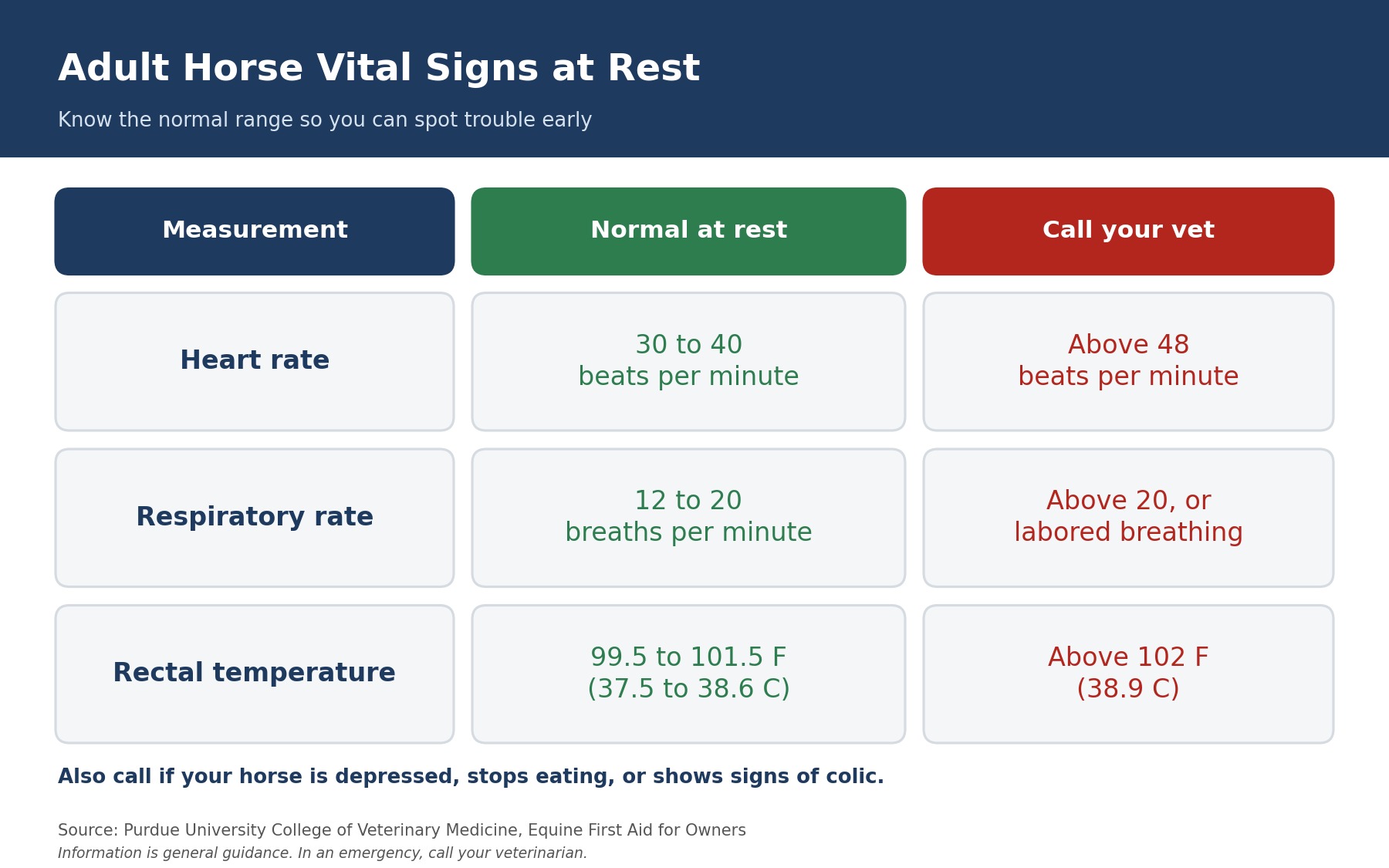
You cannot tell whether a number is abnormal unless you know what normal looks like. Equine hospitals such as Purdue’s teach owners to track three measurements at rest: heart rate, respiratory rate, and rectal temperature. Learn them on a quiet day, write them down, and keep the note in your barn so you can read them to your veterinarian over the phone.
 |
| Source: Purdue University College of Veterinary Medicine, Equine First Aid for Owners |
References differ slightly on the exact ranges, and individual horses vary, so your own horse’s baseline matters more than any chart. A fit, relaxed horse often sits at the low end for heart rate, while a nervous horse or a foal runs higher. What matters is a clear change from your horse’s usual numbers.
How to Take Temperature, Pulse, and Respiration Safely
- Temperature: Use a digital thermometer with lubricant, stand to the side of the hindquarters, and ask a helper to hold the horse. Your safety comes first.
- Heart rate: Place a stethoscope just behind the left elbow and count beats for 30 seconds, then double the number.
- Respiration: Watch the flank rise and fall and count breaths for 30 seconds, then double it.
- Gums: Press a finger on the gum. Healthy pink color should return in about two seconds or less.
Taking vitals does not replace a veterinary exam, but it gives your vet a much clearer picture before they even arrive. If you want a hand building a baseline for your own horses, reach our team and ask about a routine wellness visit.
Colic Symptoms and What to Do While You Wait
Colic is a general term for abdominal pain, and it is one of the most common reasons owners place an urgent call. The cause can be as simple as trapped gas or as serious as a twisted or blocked intestine. In the early stages, the two can look almost identical, which is why the decision about how serious it is belongs to your veterinarian, not to the person standing in the stall.
Early Warning Signs of Colic
- Pawing at the ground or swinging the head toward the flank
- Biting at the belly or kicking at the abdomen
- Curling the upper lip or stretching out as if to urinate
- Lying down more than usual, or getting up and down repeatedly
- Rolling, especially if the horse drops down in unusual spots
- Sweating without exertion
- Refusing feed, passing little or no manure, or a dull, depressed attitude
- A swollen, bloated-looking belly
Most horses show only a few of these signs during an episode. A horse that is rolling, thrashing, sweating heavily, or whose heart rate climbs above 48 beats per minute is telling you the pain is significant. Do not wait for several signs to appear before you pick up the phone.
When to Call a Horse Vet in Manitoba About Colic
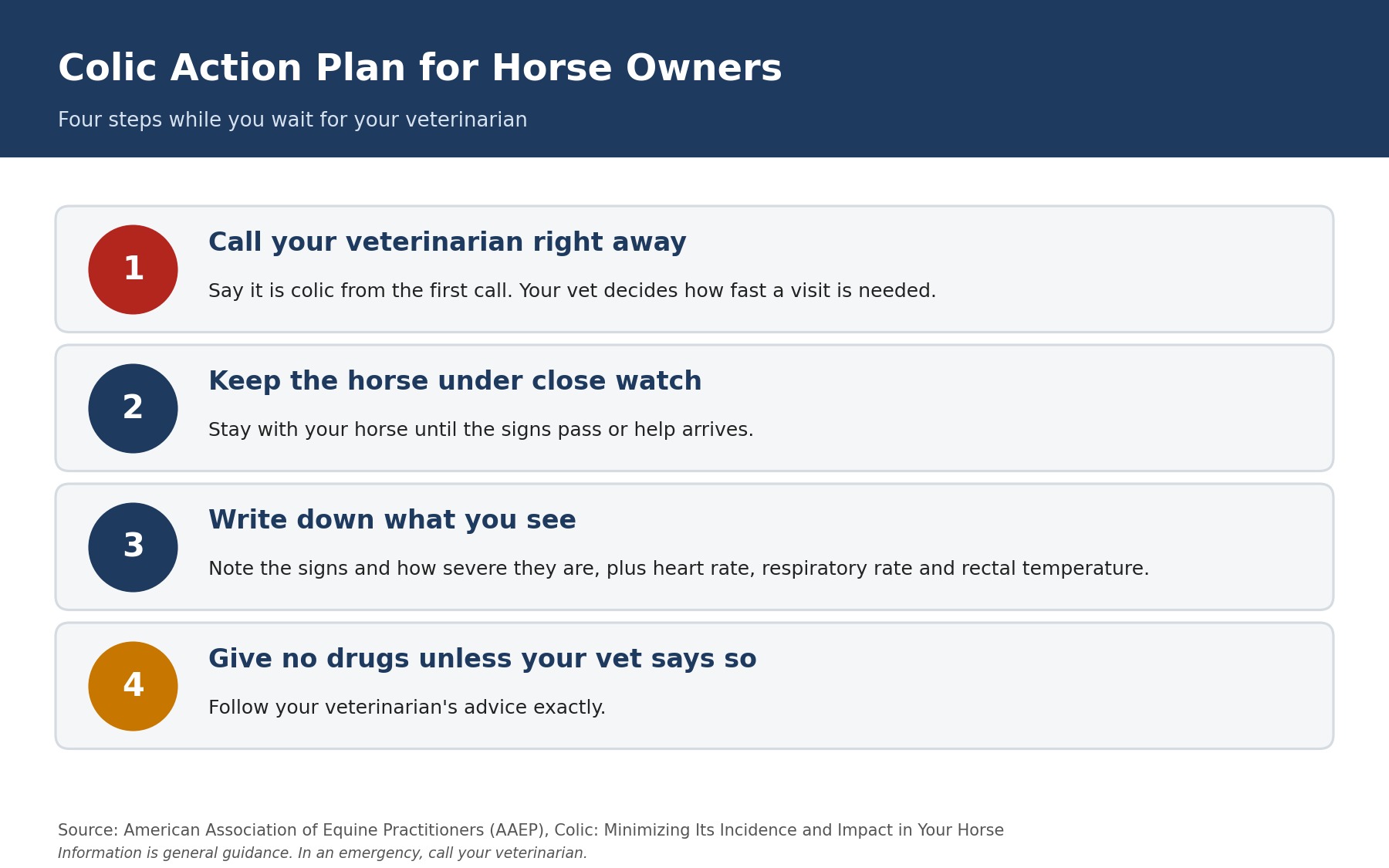
The answer is at the first sign. The American Association of Equine Practitioners advises owners to call immediately and to say that the horse has colic from the start. For a mild case, your veterinarian may decide a visit is not needed right away, but that is a decision to make together on the phone, not alone in the barn.
Purdue’s equine hospital describes a practical approach for horses whose signs and vital signs look relatively normal: remove feed, walk the horse for about 15 minutes, then monitor for the next 30 minutes and call if the horse gets worse. If the signs or the exam findings are abnormal, call right away and walk the horse if it is safe to do so. A heart rate above 48 or a respiratory rate above 20 are both worth reporting.
First Aid Before the Vet Arrives
 |
| Source: American Association of Equine Practitioners, Colic: Minimizing Its Incidence and Impact in Your Horse |
Keep the horse in a safe, well-bedded area away from fences and hard corners, and do not let anyone stand in a spot where a rolling horse could crush them. Remove feed until your vet says otherwise. Have your notes ready, including when the signs began, any changes in manure or appetite, and the vital signs you recorded.
Laminitis and Hoof Emergencies
Laminitis is painful inflammation of the laminae, the tissues that bond the hoof wall to the coffin bone. Manitoba Agriculture describes it as occurring when blood flow to these tissues is disrupted, and it advises treating every case as an emergency because early treatment can dramatically reduce the chance of founder. Founder is the long-term outcome, in which the coffin bone rotates inside the hoof after repeated or unresolved episodes.
Signs of Acute Laminitis
- Sawhorse stance: front feet stretched forward and hind legs placed well under the body to unload painful forefeet
- Reluctance to turn: the horse pivots on its hind legs or leans back to take weight off the toes
- Heat in the hooves: warm hoof walls and a bounding digital pulse over the fetlock
- Lying down for long periods: especially if more than one hoof is affected
- Heavy breathing or a glazed look: common when pain is severe
Common Triggers Manitoba Owners Should Know
Grass founder follows sudden access to lush forage before the horse’s system has adapted, which makes spring turnout and fast-growing fall regrowth high-risk times. High fever or serious illness can also set off an episode, as can excessive concussion on hard ground. Horses with a history of laminitis, older horses with Cushing’s disease, and heavy breeds such as drafts carry extra risk.
Prevention is realistic. Introduce pasture gradually, avoid overfeeding, and skip moldy hay. Manitoba Agriculture also offers guidance on feed sampling, including sample bags and GST exemption for samples sent through the department, which helps you identify risky hay before it reaches the feeder.
Steps to Take While You Wait
- Call your veterinarian first, then act on the instructions you are given.
- Keep the horse off lush pasture and away from grain and rich feed.
- Provide soft, deep footing such as sand or shavings if you can.
- Do not force a painful horse to walk or load into a trailer unless your vet advises it.
Foaling Emergencies and Newborn Concerns
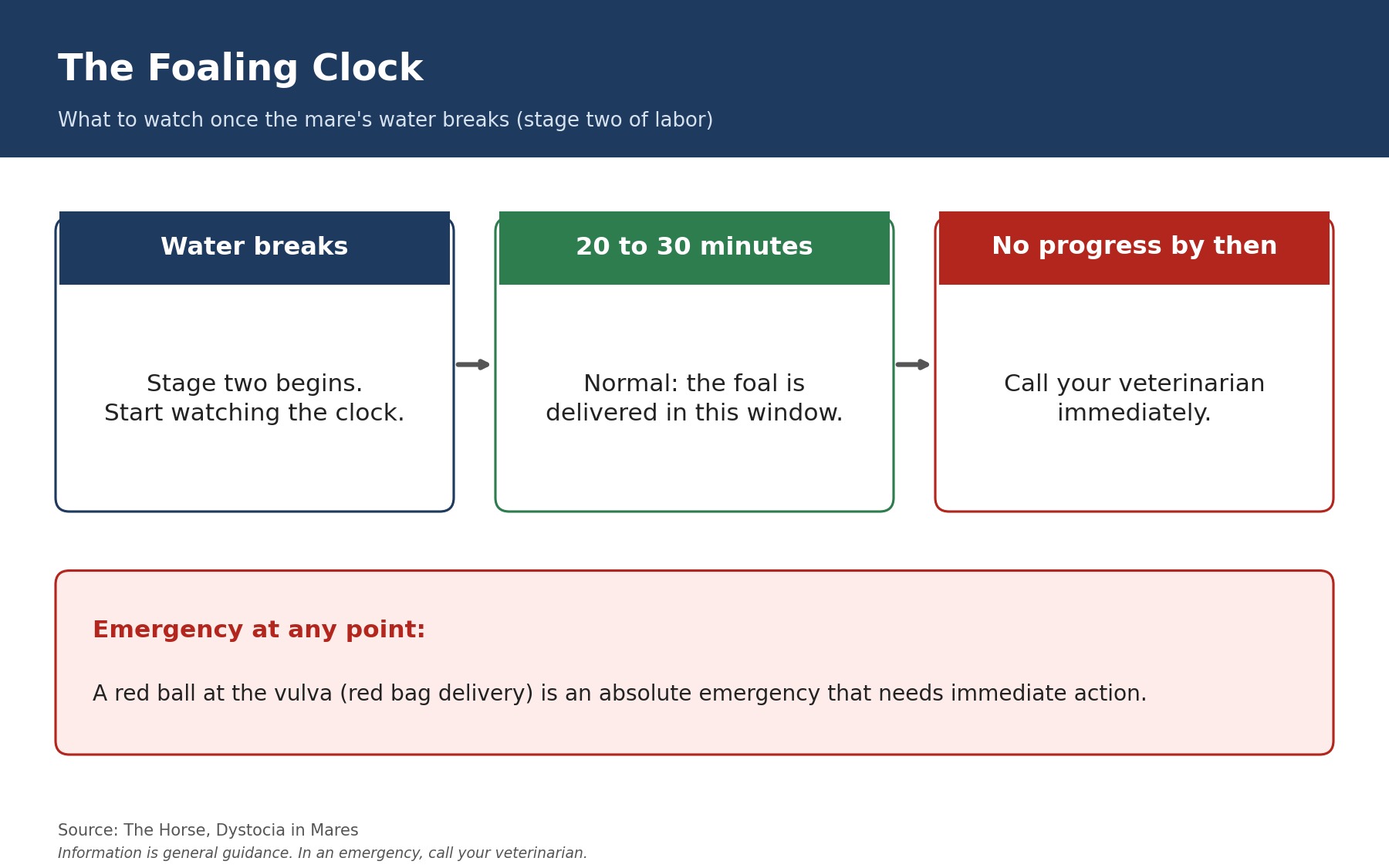
Foaling is fast when it goes well, and that speed is exactly why trouble must be caught quickly. Once the mare’s water breaks and active labor begins, the foal should arrive within a short window. If it does not, the foal can run short of oxygen, and the mare is at risk too.
The Foaling Clock
 |
| Source: The Horse, Dystocia in Mares |
Veterinarians quoted by The Horse advise calling if 20 to 30 minutes pass without the expected progress. Many equine practitioners go further and ask owners to call when a mare strains for roughly 10 minutes without two front feet and a nose appearing. Calling early costs you a phone call. Waiting costs you minutes you cannot get back.
Red Bag Delivery and Abnormal Presentation
- Red velvety ball at the vulva: a red bag delivery, which experts call an absolute emergency
- One foot only, soles facing up, or a nose with no feet: signs of abnormal positioning
- A mare that looks exhausted and stops straining: without a foal delivered
- A retained placenta after delivery: call your vet if it has not passed within a few hours
Call your veterinarian before foaling begins if your mare is a first-time mother, has had a difficult birth before, or you live far from the clinic. Telling the team in advance lets them plan around your due date. Once the foal is on the ground, call if it is not standing within about an hour or nursing within about two hours.
Respiratory Distress, Wounds, and Eye Injuries
Trouble Breathing
Rapid, heavy breathing, flared nostrils, an outstretched neck, and a visible ridge along the belly known as a heave line all point to a horse working hard to move air. This is never a wait-and-see problem. Move the horse to a cool, dust-free, quiet space, keep it calm, and call right away.
Wounds and Lameness
Not every cut needs a vet, but several do: wounds that bleed heavily, punctures, cuts that gape or sit near a joint or tendon, and any injury with severe lameness. Joint and tendon injuries can look small on the surface and still be serious underneath. Rinse debris gently with clean water, apply light pressure to control bleeding, and call for guidance.
Eye Problems
The eye can deteriorate within hours. Squinting, heavy tearing, cloudiness, swelling, or a horse that suddenly resists light or touch around the eye deserves a same-day call at minimum. Keep the horse in a dim stall and avoid rubbing or applying anything to the eye until your veterinarian has seen it.
Fever, Infectious Disease, and Biosecurity
Fever and Illness After Travel
A rectal temperature above 102 F (38.9 C) means a call to your vet. Rural horses travel more than owners sometimes realize: shows, trail rides, breeding visits, sales, and seasonal pasture moves all expose a horse to unfamiliar animals and shared equipment. Stress from travel and winter weather can lower resistance, so a horse returning from an event is at higher risk than one that stayed home.
- If a horse develops a fever or looks unwell at an event, separate it from other horses right away.
- Do not share buckets, brushes, or tack between horses that may be sick.
- Ask your veterinarian how long returning horses should stay apart from the herd and what testing makes sense for your operation.
Barns that also keep cattle, sheep, or goats may benefit from planning across species, and livestock veterinary services can help you build one biosecurity routine for the whole farm.
New World Screwworm: What Horse Owners Should Know
New World screwworm is a parasitic fly whose larvae feed on living tissue and can cause severe, sometimes fatal wounds. According to the Canadian Food Inspection Agency, it is an immediately notifiable disease in Canada, and owners who suspect it should contact their veterinarian at once. Warning signs include a wound that keeps getting worse, discharge, a foul smell, or visible maggots.
CFIA has placed temporary import restrictions on horses coming from affected parts of the United States, so check current rules before you buy, board, or haul a horse across the border. Do not treat a suspicious wound with parasite medications on your own. Some of the drugs used are extra-label in horses and should only be given under veterinary direction.
Build an Emergency Plan Before You Need One
The calmest emergencies are the ones you prepared for. A few minutes of planning now saves critical time later, especially when help has to travel a long way.
| Preparation | Why it matters |
|---|---|
| Post your vet’s phone number in the barn and save it in your phone | You will not hunt for it under stress. |
| Write clear directions with the road name, legal land description, and landmarks | Responders can find a rural property faster, even after dark. |
| Keep a digital thermometer, stethoscope, clean towels, and a flashlight together | You can take vitals and see clearly within a minute. |
| Record each horse’s normal temperature, pulse, and respiration | Your vet can judge changes immediately. |
| Know your hauling plan and keep a trailer ready and hitchable | Moving a horse to a clinic is faster when the rig is set. |
| Keep vaccination and deworming records handy | Your vet will ask about both. |
Also decide in advance who can help you at the barn. A second person to hold the horse, open gates, and watch for the vet’s truck makes a real difference at 2 a.m.
Horse Vet Care Across Southern Manitoba
Rolling Plains Veterinary Corporation serves horse owners from three clinics: our clinic in St. Claude, the Carman clinic, and the Notre Dame de Lourdes clinic. The St. Claude clinic is at 127 PTH 2 E and takes calls at (204) 379-2374. Describe what you are seeing, and the team will help you decide whether to haul in, wait for a farm visit, or keep the horse comfortable at home while help is on the way.
Routine care is part of emergency readiness. Wellness exams, vaccinations, dental work, and hoof checks all help catch problems before they become crises. If your horses share a farm with dogs, cats, or livestock, ask about the full range of veterinary services available through the same team.
Frequently Asked Questions About Calling a Horse Vet
When should I call a horse vet right away?
Call right away for colic signs like rolling, sweating, or repeated lying down, trouble breathing, a stalled foaling or a red ball at the vulva, sudden severe lameness, heavy bleeding, deep puncture wounds, a rectal temperature above 102 F (38.9 C), or any suspected laminitis. If you are unsure, call and describe what you see. Your veterinarian can tell you whether it needs a visit now.
What are the first signs of colic in a horse?
Early signs include pawing, looking or biting at the flank, kicking at the belly, curling the upper lip, stretching out as if to urinate, repeatedly lying down and getting up, and refusing feed. Some horses show only a few of these signs. Because mild and severe colic can look alike at first, call your veterinarian from the start and let them decide how urgent it is.
Can I give my horse medication while I wait for the vet?
No. Do not give any drug unless your veterinarian tells you to. Pain relievers can hide signs your vet needs to see and may not be safe for every horse or every cause of colic. Keep the horse safe, note the signs, and follow the instructions you are given over the phone.
How long can a mare labor before I need help?
Once the water breaks, the foal is normally delivered within about 20 to 30 minutes. If 20 to 30 minutes pass without progress, or you see a red velvety ball at the vulva, call your veterinarian immediately. Many equine vets also ask you to call if the mare strains for about 10 minutes with no sign of front feet and a nose.
Is laminitis an emergency?
Yes. Manitoba Agriculture advises treating laminitis as an emergency because early treatment can sharply reduce the chance of founder, which is rotation of the coffin bone. Call right away if your horse stands with its front feet stretched out, is reluctant to turn, has hot hooves, or has a pounding pulse at the fetlock.
What should I do if I suspect New World screwworm?
Call your veterinarian right away. In Canada, New World screwworm is an immediately notifiable disease, so suspected cases are reported to the Canadian Food Inspection Agency. Watch for wounds that worsen over time with discharge or a foul odour, and do not try to treat a suspicious wound yourself.
How can I find a horse vet near me in southern Manitoba?
Rolling Plains Veterinary Corporation has clinics in St. Claude, Carman, and Notre Dame de Lourdes. Call the St. Claude clinic at (204) 379-2374, describe the problem, and the team will help you decide the safest next step for your horse.
Contact Us Today
Do not wait for a small sign to turn into a crisis. Save the number, learn your horse’s normal vitals, and call early whenever something looks wrong. To schedule an exam or talk through a plan for your barn, call (204) 379-2374 or use the button below.
Categorised in: Horse Care
This post was written by Dr. Marc Phillipot
Comments are closed here.